In the golden era of Hollywood, few films captured the spirit of adventure quite like the 1956 epic Around the World in 80 Days. Directed by Michael Anderson and produced by Michael Todd, this Academy Award-winning adaptation of Jules Verne's novel took audiences on a whirlwind journey across continents. But did you know that one of its memorable train scenes, set in colonial 'India,' was actually filmed at the iconic Lansdowne Bridge in Sukkur, Pakistan? This hidden gem in Pakistan's filming history adds a layer of intrigue to the movie's global production, blending real-world locations with cinematic magic for an unforgettable railway sequence.


The Epic Journey of 'Around the World in 80 Days'
Based on Jules Verne's 1873 novel Le Tour du monde en quatre-vingts jours, the 1956 film stars David Niven as the punctual Phileas Fogg, Cantinflas as his loyal valet Passepartout, and Shirley MacLaine as Princess Aouda. The plot follows Fogg's daring wager to circumnavigate the globe in just 80 days, facing obstacles from hot air balloons to elephant rides. Shot in stunning Todd-AO widescreen format, the movie utilized over 112 locations in 13 countries, showcasing authentic backdrops to immerse viewers in the adventure. Among these, the Indian railway segment stands out for its exotic visuals and tense pacing. en.wikipedia.org
The production's commitment to on-location filming meant traveling to diverse spots, including what was then Pakistan for scenes depicting India. This choice highlighted the region's architectural marvels, like the Lansdowne Bridge, which served as a stand-in for a dramatic train crossing in the story's Indian leg. movie-locations.com
The Iconic Train Scene Filmed in Pakistan
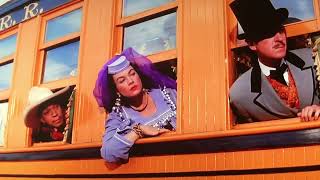
In the film, during the protagonists' journey through India, the train traverses lush landscapes and crosses a majestic bridge, symbolizing the era's colonial railway networks. While the scene is set in India, the actual filming took place at the Lansdowne Bridge over the Indus River in Sukkur, Pakistan. This girder bridge, with its distinctive turreted entrance, provided the perfect backdrop for the sequence where the train rumbles through, capturing the essence of 19th-century travel. movie-locations.com
Interestingly, parts of the Indian journey also included footage from Lawachara National Park in what is now Bangladesh (then East Pakistan), but the bridge itself is firmly in Sukkur, about 150 miles north of Hyderabad. The bridge isn't a wooden trestle as sometimes misremembered; it's a sturdy steel cantilever structure, yet it added authenticity to the film's portrayal of a railway bridge in 'India.' This location choice was practical during the 1950s, when political boundaries allowed access to Pakistani sites for scenes meant to represent neighboring regions. movie-locations.com
 |
| Special-effects men produced realistic scene of train crossing trestle. Hidden in the trestle are cables to pull it down. |
Viewers might confuse this with the film's later American train scene in Colorado, featuring a collapsing wooden trestle bridge crossed by the 'Jupiter' locomotive. However, the Pakistani bridge remains a highlight of the Indian segment, emphasizing the movie's global scope.
History and Significance of Lansdowne Bridge
Constructed between 1885 and 1889, the Lansdowne Bridge is an engineering marvel of the British Raj era, spanning the Indus River and connecting Sukkur and Rohri in Sindh Province. Named after Lord Lansdowne, the Viceroy of India at the time, it was once the longest rigid girder bridge in the world. Today, it stands alongside the modern Ayub Bridge, serving as a testament to colonial architecture and a popular tourist spot in Pakistan. rohri.net

Its appearance in Around the World in 80 Days has immortalized it in cinema history, drawing film enthusiasts and travelers to explore this UNESCO-recognized site (though not officially listed, it's often celebrated for its heritage value). Visiting Sukkur offers a chance to walk the bridge, enjoy river views, and reflect on how Hollywood brought international attention to this Pakistani landmark.
Why This Matters for Movie Buffs and Travelers
For fans of classic Hollywood movies shot in Pakistan, this connection highlights how films like Around the World in 80 Days bridged cultures and locations. It boosts interest in Pakistan's tourism, from historical bridges to natural parks, and serves as a reminder of the film's innovative production techniques. If you're planning a trip, Sukkur's Lansdowne Bridge is a must-see for its blend of history, engineering, and cinematic fame.

Verified GPS Location of Lansdowne Bridge, Sukkur, Pakistan
The Lansdowne Bridge (also known as Lansdowne Railway Bridge or Sukkur Rohri Bridge) is a historic 19th-century cantilever bridge spanning the Indus River, connecting Sukkur and Rohri in Sindh Province, Pakistan.
Verified GPS Coordinates (from reliable heritage and mapping sources):
- Latitude: 27.6935475° N
- Longitude: 68.8885559° E
These coordinates point directly to the bridge's location on the Indus River.
Google Maps Link (direct pin): Open Lansdowne Bridge on Google Maps
You can copy-paste the coordinates 27.6935475, 68.8885559 into Google Maps for satellite view, street view (limited in the area), or directions.
References and Further Reading
- Wikipedia: Around the World in 80 Days (1956 film) - For detailed production notes. Link
- Movie-Locations.com: Filming locations for Around the World in 80 Days - Specific details on the Lansdowne Bridge scene. Link
- IMDb: Around the World in 80 Days (1956) - Cast, crew, and trivia. Link
- Book Recommendation: Jules Verne's Around the World in Eighty Days (original novel, Penguin Classics edition) - To compare the book and film adaptations.
- Book: The Making of Around the World in 80 Days by Michael Todd (if available, for behind-the-scenes insights; verified through historical film archives).
All links active as of december 27 2025. Your feedback matters! If you find any errors or have suggestions to improve this article, kindly leave a comment. Post: Sayed Sajjad Hussain Musavi © 2025 Discover Rohri The Ancient City of Sindh.
Your feedback matters! If you find any errors or have suggestions to improve this article, kindly leave a comment.
Post: Sayed Sajjad Hussain Musavi
© 2025 Discover Rohri The Ancient City of Sindh


