The Top 5 Historic Sites in Rohri You Can’t Miss!

Saturday, 5 July 2025

Mourning Processions No Longer Held in Rohri City - Part 2 Sindhi Culture

 Mourning Processions No Longer Held in Rohri City (Part 2)

Rohri, a historic and culturally rich city in Sindh, has long been known for its ancient traditions and mourning practices, particularly during Muharram. Over time, several of these mourning processions and taziya rituals, once integral to the city’s identity, have ceased. This article sheds light on these discontinued processions, preserving their historical and cultural significance as part of Sindh’s heritage.

White Coffin mourning procession in Rohri.


White Coffin (Acho Taboot)

The White Coffin "اڇو تابوت" procession was organized by the Shirazi Syed community. Syed Imamuddin Shah, son of Syed Sher Ali Shah, was responsible for its arrangements. After his demise, his son Syed Ghulam Shah Shirazi continued the tradition. Syed Ghulam Shah passed away around 1925, leaving his son Abdullah Shah too young to carry on. The two key assistants, both from the Channa caste, were vital to the procession; one had already passed away, and the other died four or five years after Syed Ghulam Shah’s death, leading to the procession’s discontinuation.

This procession began from the Akhund neighborhood’s mosque and was named "White Coffin" due to the white cloth draped over the taziya. A notable feature was the significant participation of Rohri’s Hindu community, who joined in large numbers with great reverence, many actively mourning alongside, showcasing remarkable interfaith harmony.

Amir Bakhsh Shah Jilani’s Procession

Amir Bakhsh Shah Jillani Jo Mattam,"امير بخش شاه جيلاني جو ماتم" a descendant of Syed Mahmood, was alive in 1244 AH (1828 CE). His procession started from the shrine of Hajna Shah. Its route included Mir Aminuddin Khan Hussain’s mosque (also known as Naqadeen’s mosque), Sheesha Mahal Tar, Hiranand Hospital, the barber’s quarter, Pir Piran Street, Dhak Bazaar, Chosool, and Municipal Road, before concluding at Hajna Shah’s shrine. After Amir Bakhsh Shah, his son Imam Bakhsh Shah and later his brother Sultan Ahmed Shah Jilani continued the procession for a few years before it eventually stopped.

Dital Shah’s Procession

Dital Shah Jo Mattam,"ڏتل شاه جو ماتم" who passed away on April 6, 1939, belonged to the Nawaz Ali Shah Rizvi Syed community in the Khwaja Potan neighborhood, with their havelis located opposite the municipality. This procession, held on the 2nd of Muharram, began at Chosool and passed through Municipal Road, Hajna Shah’s shrine, Mir Amiruddin Hussain’s mosque, Sheesha Mahal Tar, Hakim’s hotel, the barber’s quarter, Pir Piran Street, and Dhak Bazaar, before concluding at Chosool. The taziya was then placed in Khwaja Mohammad Badani’s mosque. After Dital Shah’s death, his maternal grandfather, Syed Ghulam Haider Shah, managed the procession for several years. However, when he migrated to Hyderabad, the procession ceased.

Kalhoras’ Procession

The Kalhoras Jo Mattam "ڪلوڙن جو ماتم" Kalhora community has been settled in Rohri since ancient times, with historical documents from the 10th and 11th Hijri centuries attesting to their presence. The Rohri Kalhoras identify as Abbasi. The prominent lawyer Abdul Majeed Abbasi’s family is also originally Kalhora. Their ancestors organized mourning processions until the British era. Mian Mohammad Mohsin bin Mohammad Sadiq, likely a revenue official, managed this procession during his lifetime. He passed away on January 14, 1911, at the age of 48. It is unclear whether his son, Mian Abdul Razzaq, continued the tradition. The procession’s route included the Takay Wale Masjid (also known as the Takay Mosque) area, the street where the family resided, and Kharkash Mohalla (now Meman Mohalla).

Karo Qalandar

In ancient times, a procession named "Karo Qalandar, ڪارو قلندر" was held. Information about it was provided by Syed Somar Shah Jilani, Syed Ahmed Ali Shah Rizvi Miyanno, and Syed Ghulam Shabir Shah Rizvi Abdullah Poto. However, details about its route and specifics remain unclear.

Morkhand’s Procession

The Morkhand Jo Mattam,"مورڪندن جو ماتم" Morkhand community, traditionally arrow makers, were among Rohri’s ancient residents and actively participated in Muharram mourning. They organized a taziya procession on the 3rd of Muharram. Details about its route and starting point are unavailable. The last person to manage this procession was Hussain Bakhsh Morkhand. Due to the family’s extinction and members passing away without heirs, this procession also ceased.

Jamal Shah’s Procession

Little is known about Jamal Shah’s procession "Jamal Shah Jo Mattam جمال شاه جو ماتم", including which Syed family he belonged to or the specific date it was held.

Mir’s Fast (Mir Jo Rozo)

Mir Jo Rozo"مير جو روزو" On the evening of the 9th of Muharram, this procession began outside Nawab Mir Dolha’s shrine in Kot Mir Yaqoob Ali Shah and concluded at the Alam Pak of the large Imambargah opposite. According to the late Tawassul Shah Rizvi, it was earlier held on the same night at the Korakhan’s Alam near Khadim Ali Shah Rizvi’s otaq within Kot. This procession was organized by Syed Qadan Shah Rizvi as a vow for the birth of his son Aijaz Hussain Shah, accompanied by a majlis. Later, his son Manzoor Hussain Shah continued it for some time. The procession stopped between 1970 and 1975, but Aijaz Hussain Shah’s sons continue to hold a majlis on this date.

Night of the Strike (Shab-e-Zarbat) Procession

Shab-e-Zarbat "شب ضربت جو ماتم" This procession, commemorating the night of Imam Ali’s (AS) strike on the 19th of Ramadan, was initiated by Zawar Dr. Imdad Hussain Shah Musavi in 1975. It started from Masjid Iraq and passed through Karbala Maidan, Karbala Road, Lali Shahzadi’s hotel, and Musavi House, concluding just before sehri. After Dr. Musavi’s death, the procession continued for a few years before ceasing.

Reference


Post: Sayed Sajjad Hussain Musavi

© 2025 Discover Rohri The Ancient City of Sindh 

Muharram, Rohri, ta'ziyah, Sindh history, Shia traditions, cultural heritage.

#rohrihistory #muharram #taziyah #sindhculture #shiatraditions

Historical Ta'ziyah Processions in Rohri: Sindh’s Muharram Heritage

Historical Ta'ziyah Processions in Rohri: A Glimpse into Sindh’s Cultural Past

Introduction

Rohri, a historic city in Sindh, Pakistan, has long been a center of cultural and religious traditions. Among its most significant practices were the ta'ziyah processions, mourning rituals observed during Muharram to commemorate the martyrdom of Imam Hussain as. These processions, known locally as "matam," were once vibrant displays of devotion but have since ceased. This article explores four such historical ta'ziyah processions in Rohri, shedding light on their origins, routes, and cultural importance, based on historical accounts.

Historical image of the Duldul Matam procession in Rohri, showcasing the city's rich cultural and religious heritage.
Duldul Matam Rohri History Image


The Lantern-Adorned Coffin (Fanoosan Waro Taboot)

The lantern-adorned coffin, or "Fanoosan Waro Taboot, فانوسن وارو تابوت" was a striking ta'ziyah said to be crafted from glass and adorned with intricate enamel work. Organized by Syed Ali Shah, whose exact lineage whether from the Rizvi Syeds or another branch of the Sadat remains unclear, this procession began in the old Kaghazi Mohalla near Takay Wale Masjid (also known as the Takay Mosque). Starting at 3 a.m., it wound through the streets of Rohri, concluding at Shah Abdul Rahman, where participants performed rituals in honor of Mola Ali. The craftsmanship and timing of this procession highlight its unique place in Rohri’s religious history.

Eido Nani’s Ta'ziyah

Another notable procession was "Eido Nani’s ta'ziyah, عيدو نانيءَ وارو ماتم" associated with the Sheikh family. Originating from Kharkash Mohalla (now Memon Mohalla) near neighborhood of Chaquin, this ta'ziyah was also adorned with fine enamel work. The procession, led by a matamdar who served under British rule, took place on the third day of Muharram near the tomb of Shah Jiwan. This ta'ziyah reflects the involvement of diverse communities in Rohri’s Muharram observances, showcasing the city’s pluralistic heritage.

Lal Shah’s Roza

Lal Shah "Lal Shah Jo Rozo, لعل شاه جو روزو", son of Syed Inayat Ali from the Badraani neighborhood of Rizvi Sadat, founded a ta'ziyah procession that began in Loharki Samni on the fourth day of Muharram. The route included significant landmarks such as Bismillah Masjid, Hatriyon, Shahdado Mohalla, Karim Bux Street, the Old Fish Market, Sarbazar, and Musavi Shafqat Hussain Road, before returning to Loharki Samni. The ta'ziyah was stored at Bismillah (Motan Shah) Masjid and ceased around 1935. This procession’s detailed route underscores the communal participation and spatial significance of Muharram in Rohri.

Jiyal Shah’s Ta'ziyah

Jiyal Shah, "Jiyal Shah jo Mattam, جيئل شاه جو ماتم" from the Alawaldin Pota neighborhood of Rizvi Sadat, organized another ta'ziyah from Shahdado Mohalla. According to Dhani Bux Soomro, Jiyal Shah, who died without heirs, led this procession, though its exact date and route are not well-documented. After Jiyal Shah’s passing, his friend Mian Karim Bux, originally from Aror, continued the tradition for two years, relocating to Rohri to honor their friendship. Tragically, Karim Bux passed away before the next Muharram, leading to the cessation of this ta'ziyah. This story highlights the personal devotion and community ties that sustained these rituals.

Cultural and Historical Significance

These ta'ziyah processions were more than religious observances; they were expressions of Rohri’s cultural identity, blending artistry, community participation, and devotion. The use of glass and enamel work in the ta'ziyahs points to skilled craftsmanship, while the involvement of families like the Syeds and Sheikhs reflects the social fabric of the time. The cessation of these processions, particularly around the 1930s, may be linked to socio-political changes, including British colonial influence and shifting community dynamics.

References

The information is primarily drawn from:

Summary of Ta'ziyah Processions in Rohri

The following table summarizes the historical Ta'ziyah processions in Rohri that are no longer held, detailing their organizers, origins, dates, routes, and when they ceased.

Ta'ziyah Name Organizer Origin Date Route/End Point Ceased
Lantern-Adorned Coffin Syed Ali Shah Kaghazi Mohalla, Tanka Masjid Night (3 a.m.) Shah Abdul Rahman Unknown
Eido Nani’s Ta'ziyah Sheikh Family Kharkash Mohalla 3rd Muharram Near Shah Jiwan’s Tomb Unknown
Lal Shah’s Roza Lal Shah Loharki Samni 4th Muharram Bismillah Masjid, Hatriyon, Shahdado, etc. ~1935
Jiyal Shah’s Ta'ziyah Jiyal Shah / Karim Bux Shahdado Mohalla Unknown Unknown After Karim Bux’s death

Conclusion

The ta'ziyah processions of Rohri are a testament to the city’s rich cultural and religious heritage. Though these rituals have ceased, their stories, preserved through oral traditions and historical accounts, offer a window into the past. By documenting these practices, we honor the legacy of communities that shaped Rohri’s identity. For those interested in Sindh’s history, these narratives underscore the enduring power of faith and tradition.

Post: Sayed Sajjad Hussain Musavi

© 2025 Discover Rohri The Ancient City of Sindh 

Muharram, Rohri, ta'ziyah, Sindh history, Shia traditions, cultural heritage.

#rohrihistory #muharram #taziyah #sindhculture #shiatraditions

7th Muharram Mir Jo Rozo: Historical Background and Procession Details

7th Muharram Mir Jo Rozo: Historical Background and Procession Details

7th Muharram Mir Jo Rozo: Historical Background and Procession Details
Mir Jo Rozo

The 7th Muharram Mir Jo Rozo is a significant mourning procession observed in Sindh, Pakistan, with deep historical and religious roots tied to the tragic events of Karbala. This article explores the origins, key figures, and cultural significance of this annual procession, which takes place around the 7th of Muharram, commemorating the martyrdom of Imam Hussain (AS) and his companions. Below, we delve into the historical context, key organizers, and the route of the procession, optimized for search engines and aligned with modern blogging practices.

Historical Background of Mir Jo Rozo

The Mir Jo Rozo procession was initiated around 1880 by Enayat Ali Shah I (born 1843, passed away June 15, 1901), a revered figure in the local community. This procession, which begins in the evening from the Takay Wale Masjid (also known as the Takay Mosque) in the former Kagzi Mohalla, holds profound spiritual significance for the Shia Muslim community. When the procession reaches the Karbala Maidan, a reenactment of Maula Ali is performed, symbolizing the valor and sacrifice associated with the Battle of Karbala in 680 CE.

After Enayat Ali Shah I's passing, the responsibility of organizing the procession was passed down through his family and successors:

  • Ali Muhammad Shah I (born 1861, passed away August 10, 1906), Enayat Ali Shah’s younger brother, continued the tradition.
  • For a few years, Ali Gul Shah (passed away 1946), the son of Enayat Ali Shah’s sister-in-law Mushtaq Ali Shah bint Amir Bakhsh Shah Rizvi (passed away December 15, 1896), took over.
  • Subsequently, Ghulam Mehdi Shah I (born September 9, 1879), the son of another sister-in-law, Rasool Bakhsh Shah bint Hajjan Ali Shah, carried forward the tradition.
  • After his passing, his son Rasool Bakhsh Shah, also known as Rakil Shah (born December 1, 1925, passed away July 5, 1992), upheld the legacy. Notably, Rakil Shah’s household included the daughter of Ali Muhammad Shah I.
  • Following Rakil Shah, his son Ashfaq Hussain Shah (passed away December 11, 2020, without heirs) continued the tradition.
  • Currently, the procession is organized by Muayyaz Ali Shah, the nephew of Ashfaq Hussain Shah and son of Abrar Hussain Shah (passed away February 3, 2018).

The procession concludes at Kot Mir Yaqoob Ali Shah, where a significant ritual called Taho is performed at the shrine of Abdul Hussain Shah (passed away February 1930), further emphasizing the spiritual and communal importance of the event.

The Battle of Karbala: A Historical Context

The Mir Jo Rozo procession commemorates the Battle of Karbala, which occurred on the 10th of Muharram, 61 AH (October 9 or 10, 680 CE) in modern-day Iraq. This battle saw Imam Hussain ibn Ali, the grandson of Prophet Muhammad (PBUH), and his small group of 72 companions, including family members, face the large army of the Umayyad caliph Yazid I. Imam Hussain’s refusal to pledge allegiance to Yazid, whom he viewed as an unjust ruler, led to the tragic martyrdom of Hussain and his followers. This event is a cornerstone of Shia identity, symbolizing resistance against oppression and the ultimate sacrifice for justice.

The annual Muharram observances, including the Mir Jo Rozo, serve as a reminder of these sacrifices. Shia Muslims, along with some Sunni and other communities, participate in mourning rituals during the first ten days of Muharram, culminating on Ashura (the 10th day), when grief reaches its peak. The processions, including public gatherings and self-flagellation in some cases, reinforce the values of courage, justice, and devotion.

Route and Rituals of Mir Jo Rozo

The Mir Jo Rozo procession begins at the historic Takay Masjid in the Kagzi Mohalla, a location steeped in local history. As the procession moves through the streets, participants engage in matam (mourning rituals) to honor the martyrs of Karbala. Upon reaching the Karbala Maidan, a reenactment of Maula Ali’s valor is performed, resonating with the community’s reverence for the Ahl al-Bayt (the Prophet’s family). The procession concludes at Kot Mir Yaqoob Ali Shah, where the Taho ritual is conducted, symbolizing the culmination of the mourning journey.

Cultural and Religious Significance

The Mir Jo Rozo is not merely a procession but a cultural and religious institution that strengthens community bonds and preserves the memory of Karbala. It reflects the enduring legacy of Imam Hussain’s sacrifice, which continues to inspire movements for justice and resistance against tyranny. The procession also highlights the contributions of the Shah family, whose members have diligently maintained this tradition for over a century.

Reference Links and Books

  • Web References:
    • Battle of Karbala, Wikipedia: https://en.wikipedia.org/wiki/Battle_of_Karbala
    • واقعه کربلا, Urdu Wikipedia: https://ur.wikipedia.org/wiki/واقعہ\_کربلا
    • داستان کربلا, Islam Times: https://www.islamtimes.com
    • YouTube @karbala-rohri
  • Books:
    • Husayn: The Saga of Karbala by Zakir Naik (for historical context).
    • Sindhi Adab Ji Mukhtasar Tareekh by Sindhi Adabi Board (for Sindhi cultural references).
    • Research compiled by Syed Imdad Hussain Shah Rizvi Kotahi Rohri
Post: Sayed Sajjad Hussain Musavi

© 2025 Discover Rohri The Ancient City of Sindh

7th Muharram, Mir Jo Rozo, Karbala, Tanki Masjid, Enayat Ali Shah, Imam Hussain, matam, Ashura, Shia mourning, Kot Mir Yaqoob Ali Shah, Muharram, Karbala, Shia rituals, Sindh traditions, Imam Hussain, matam, Tanki Masjid, Kot Mir Yaqoob Ali Shah


#muharram #mirjorozo #karbala #imamhussain #shiamourning #sindhtraditions

Monday, 30 June 2025

Lansdowne Bridge Rohri: A Historical Marvel of Engineering

The Ayub Bridge Over the Indus River: A Historical and Engineering Marvel from British Era to Modern Pakistan

The Ayub Bridge, stretching across the mighty Indus River between Sukkur and Rohri in Sindh, Pakistan, stands as a testament to engineering ingenuity and historical transformation. Completed in 1962, this steel arch bridge was constructed during Pakistan's formative years under President Ayub Khan, complementing its older neighbor, the Lansdowne Bridge, built by the British in 1889. Together, these structures narrate a compelling tale of colonial ambition, post-independence progress, and enduring connectivity. This article explores the Ayub Bridge's rich history, its engineering brilliance, and its pivotal role in Pakistan’s development, while situating it alongside the Lansdowne Bridge and the broader context of the transition from British rule to independence.

The British Era: The Lansdowne Bridge (1889)

Lansdowne Bridge Rohri over Indus River
The Lansdowne Bridge (1889), a cantilever masterpiece connecting Sukkur and Rohri over the mighty Indus River.

Before the Ayub Bridge graced the Indus, the British colonial government tackled the challenge of spanning this vital river with the Lansdowne Bridge a feat that revolutionized regional connectivity.

Construction and Engineering

  • Timeline: Work began in 1887, with completion marked by its opening on March 25, 1889.
  • Naming: Named in honor of Lord Lansdowne, Viceroy of India from 1888 to 1894.
  • Design: A cantilever bridge, featuring a main span of approximately 820 feet (250 meters), designed by British engineer Sir Alexander Meadows Rendel. Its two towering steel trusses were a marvel of 19th-century engineering.
  • Materials: Constructed using premium steel imported from Britain, assembled with meticulous precision to endure the Indus’s seasonal floods.
  • Challenges: The river’s shifting currents and silty bed demanded innovative caisson-based foundations. Harsh working conditions and logistical complexities further tested the builders’ resolve.

Significance

  • Trade and Connectivity: By linking railway lines between Sukkur and Rohri, the bridge replaced erratic ferry services, streamlining the transport of goods like cotton and grains.
  • Military Role: It bolstered British strategic control, enabling swift troop deployments to the northwestern frontier.
  • Economic Impact: Sukkur and Rohri flourished as commercial hubs, owing to improved market access and resource distribution.

Hailed as a colonial engineering triumph, the Lansdowne Bridge served admirably but eventually strained under modern demands, paving the way for its successor.

Transition to Independence: 1947 and Beyond

The 1947 partition birthed Pakistan, reshaping the region’s dynamics. With Sukkur and Rohri falling within Pakistani territory, the Lansdowne Bridge retained its utility amid a new national context.

Post-Partition Role

  • Refugee Movement: During partition’s upheaval, the bridge aided the mass migration of refugees and the reallocation of resources across borders.
  • Continuity: As inherited infrastructure, it remained a lifeline in Pakistan’s nascent transport network. Yet, its aging design soon underscored the need for a modern alternative.

Post-Independence: The Ayub Bridge (1962)

Ayub Bridge 1962 spanning the Indus River between Sukkur and Rohri
The Ayub Bridge (1962), a steel arch masterpiece, complements the historic Lansdowne Bridge across the Indus River.


By the late 1950s, Pakistan’s burgeoning population and economy necessitated advanced infrastructure. The Ayub Bridge emerged as a bold response, symbolizing the nation’s drive toward progress under President Ayub Khan.

Lansdowne Bridge Rohri: A Historical Marvel of Engineering
Lansdowne Bridge Under Construction, 1888


Historical 1888 image of Lansdowne Bridge Rohri under construction, with barges and workers assembling the steel cantilever structure over the Indus River

Lansdowne Bridge Rohri under construction 1888


Construction and Engineering

  • Timeline: Construction commenced in 1960 and concluded with its inauguration on May 6, 1962.
  • Naming: Named after Field Marshal Mohammad Ayub Khan, who led Pakistan from 1958 to 1969.
  • Design: A steel arch bridge with a span of 806 feet (246 meters), designed by American engineer David B. Steinman and built by British firm Dorman Long and Company alongside Pakistan Railways. It featured a single railway track and pedestrian pathways.
  • Innovations: Its coiled wire rope suspenders were groundbreaking, earning it the distinction of the world’s third-longest railway arch span upon completion.
  • Challenges: Engineers grappled with the Indus’s depth and currents, while funding and international collaboration tested project management. Nonetheless, it was delivered on schedule.

Significance

  • Modernization: The bridge showcased Pakistan’s post-independence engineering prowess and commitment to development.
  • Enhanced Connectivity: Positioned beside the Lansdowne Bridge, it dedicated itself to rail traffic, while the older bridge shifted to road use, doubling regional capacity.
  • Economic Growth: It fueled trade and industrial expansion in Sindh, benefiting agriculture, markets, and local industries.
  • Strategic Value: During the 1965 and 1971 Indo-Pakistani wars, it ensured rapid military logistics.

Celebrated at its opening by Ayub Khan, the bridge became an emblem of Pakistan’s sovereignty and forward-looking spirit.

Comparing the Bridges

Aspect Lansdowne Bridge (1889) Ayub Bridge (1962)
Design Cantilever, steel trusses Steel arch, wire rope suspenders
Span ~820 feet (250 meters) ~806 feet (246 meters)
Purpose Initially railway, later road Railway with pedestrian access
Era British colonial Post-independence Pakistan
Capacity Limited by 19th-century standards Built for modern traffic demands
Current Status Repurposed for road traffic In use for railway traffic

While both bridges were revolutionary, the Ayub Bridge met the needs of a modernizing nation, building on the Lansdowne’s legacy.

Cultural and Historical Impact

  • Landmarks: The twin bridges are cherished icons in Sukkur and Rohri, blending colonial heritage with national pride in local art and lore.
  • Community: They’ve knitted communities together, enhancing social and economic ties across the river.
  • Legacy: The Lansdowne reflects colonial engineering, while the Ayub Bridge heralds Pakistan’s resilience and ambition.

Challenges and Controversies

  • Lansdowne Bridge: Its construction triumphed over nature’s obstacles, though at a human cost under grueling labor conditions.
  • Ayub Bridge: While largely free of major documented disputes, typical infrastructure challenges like funding or environmental concerns may have arisen.

Current Status and Preservation

Both bridges thrive today:

  • Ayub Bridge: Actively supports railway traffic, maintained by Pakistan Railways with regular upkeep.
  • Lansdowne Bridge: Now a road bridge, it’s valued as a heritage site, often highlighted in tourism efforts.

Preservation initiatives safeguard their historical and functional roles, ensuring their legacy endures.

Significance of the Lansdowne Bridge

The Lansdowne Bridge has left an indelible mark on the region’s history, economy, and culture.

Economic Contributions

  • Trade Boost: It streamlined the transport of goods like cotton and grains.
  • Railway Network: Strengthened connectivity between northwestern Pakistan and Karachi’s ports.
  • Growth: Turned Sukkur and Rohri into thriving commercial centers.

Cultural and Historical Value

  • Colonial Heritage: Reflects British architectural and engineering ambitions.
  • Local Pride: A cherished landmark in Sindh, symbolizing progress.
  • Historical Role: Supported refugee movement during the 1947 partition.

Today, it attracts tourists and historians who admire its blend of functionality and beauty.

Preservation and Legacy

Now over 130 years old, the Lansdowne Bridge remains in use, a testament to its durable design and ongoing care by Pakistan Railways.

Preservation Efforts

  • Inspections: Regular checks ensure structural safety.
  • Repairs: Steel reinforcements and anti-corrosion coatings maintain its condition.
  • Heritage Status: Recognized as a national treasure, it’s preserved for future generations.

Current Use

While the nearby Ayub Bridge handles most modern rail traffic, the Lansdowne Bridge still serves as a secondary crossing and pedestrian path, preserving its legacy as both a functional and historical monument.

Visiting the Lansdowne Bridge

Ayub and Lansdowne Bridges spanning the Indus River in Rohri, Pakistan, in 2025
The Lansdowne Bridge (left) and Ayub Bridge (right) stand as enduring symbols of engineering and history over the Indus River in Rohri, Pakistan.

Planning a trip to Rohri? The Lansdowne Bridge is a highlight not to be missed.
  • Location: Near Rohri city center, easily reachable from Sukkur.
  • Best Time: Visit at sunrise or sunset for stunning views.
  • What to Do: Walk the pedestrian path, photograph the steel structure, and enjoy the Indus River scenery.

Nearby attractions include the Sukkur Barrage and Sadhu Bela Temple, adding depth to your visit.

Conclusion

The Ayub Bridge, alongside the Lansdowne Bridge, charts a journey from British colonial mastery to Pakistan’s independent ascent. The Lansdowne Bridge (1889) forged early connectivity, serving imperial goals, while the Ayub Bridge (1962) propelled a young nation forward, embodying its engineering and aspirations. Spanning the Indus, they remain vital links past and present intertwined shaping Sindh’s history, economy, and identity.

References


Post: Sayed Sajjad Hussain Musavi

© 2025 Discover Rohri The Ancient City of Sindh

#LansdowneBridge, #Rohri, #PakistanHistory, #EngineeringMarvel, #BritishColonialArchitecture.


Sunday, 29 June 2025

Rohri Railway Station: A Historical Hub of Connectivity in Pakistan

Rohri Railway Station: A Historical Hub of Connectivity in Pakistan

Introduction

Rohri Railway Station, situated in the Sukkur District of Sindh, Pakistan, is a historic and strategic junction in the country’s railway network. Established in 1889 during the British colonial period, it has served as a critical link for trade, travel, and cultural exchange across Pakistan. Located near the iconic Indus River and the Lansdowne Bridge, the station connects major cities like Karachi, Lahore, Peshawar, and Quetta. This article provides an in-depth exploration of Rohri Railway Station’s history, architecture, modern significance, and its role in Pakistan’s evolving transportation landscape, optimized with advanced on-page SEO techniques to ensure high visibility on search engines.

The Historical Significance of Rohri Railway Station

Rohri Railway Station was developed as part of the North Western Railway (NWR), a vital artery of British India’s railway system. Constructed in 1889, it was strategically positioned to connect Sindh with Punjab and other regions, facilitating the movement of goods, passengers, and military personnel. The station’s proximity to the Indus River made it a key hub for trade routes, especially with the completion of the Lansdowne Bridge in 1889, an engineering marvel that linked Rohri with Sukkur across the river.

During the colonial era, the station played a significant role in military logistics, particularly during World War II, when it supported the transport of troops and supplies. The 1947 partition of India and Pakistan saw Rohri Railway Station (history) as a focal point for mass migrations, with millions passing through its platforms. Its colonial-era architecture, characterized by red-brick buildings, arched windows, and spacious platforms, remains a testament to its historical prominence.

The station also holds cultural significance, as it is located near Sukkur, a city steeped in Sindhi heritage. Local folklore and oral histories often reference the station as a meeting point for travelers and traders, contributing to its status as a cultural landmark.

Architectural and Structural Highlights

Rohri Railway Station’s architecture reflects the grandeur of British colonial design. The main building features red-brick construction, high ceilings, and large verandas designed to combat the region’s intense heat. The station’s platforms, originally built to accommodate steam locomotives, have been modernized to handle diesel and electric trains. The station spans multiple tracks, with dedicated facilities for freight and passenger services.

The nearby Lansdowne Bridge, a cantilever structure, is a UNESCO-recognized engineering feat that complements the station’s historical aesthetic. The bridge’s intricate lattice work and robust design allowed trains to cross the Indus River, making Rohri a critical junction. The station also houses a small museum showcasing artifacts from the colonial railway era, including vintage tickets, signaling equipment, and photographs.

Modern-Day Importance of Rohri Railway Station

Today, Rohri Railway Station remains a cornerstone of Pakistan Railways’ network, serving as a major junction on the Main Line-1 (ML-1), which connects Karachi to Peshawar. The station is integral to the China-Pakistan Economic Corridor (CPEC), a multi-billion-dollar infrastructure project that includes upgrading ML-1 to enhance speed, capacity, and efficiency. These upgrades aim to reduce travel times and boost freight transport, positioning Rohri as a key player in Pakistan’s economic growth.

The station handles prominent trains such as the Khyber Mail, Bolan Mail, and Allama Iqbal Express, offering connectivity to major urban centers and remote regions. It supports both passenger and freight services, with goods like agricultural produce, textiles, and industrial materials passing through daily. The station’s freight yard is equipped to handle large cargo volumes, supporting local businesses and international trade routes.

For tourists, Rohri Railway Station is a gateway to Sindh’s cultural treasures. It provides easy access to the Sukkur Barrage, a vital irrigation structure, and historical sites like the ancient city of Mohenjo-Daro, a UNESCO World Heritage Site, and the Sadhu Bela Temple. The station’s location also makes it a convenient stop for exploring the vibrant markets and shrines of Sukkur, such as the Masoom Shah Jo Minaro.

Economic and Social Impact

Rohri Railway Station significantly contributes to the local economy by facilitating trade and employment. The station employs hundreds of workers, including porters, ticketing staff, and maintenance crews, providing livelihoods for the surrounding community. Local vendors and shopkeepers benefit from the influx of passengers, with nearby markets selling Sindhi handicrafts, food, and souvenirs.

The station also fosters social connectivity by linking rural areas with urban centers, enabling access to education, healthcare, and job opportunities. Community initiatives, such as railway-sponsored literacy programs and health camps, further enhance its social impact.

Why Rohri Railway Station Matters Today

Rohri Railway Station is more than a historical landmark; it is a critical node in Pakistan Railways’ network. It connects major routes, including the Main Line-1 (ML-1), which is part of the China-Pakistan Economic Corridor (CPEC) upgrades. The station serves express trains like the Khyber Mail and Bolan Mail, making it a lifeline for commuters and businesses in Sindh and beyond.

The station also supports local economies by facilitating the transport of goods and passengers. Its proximity to Sukkur, a major commercial hub, enhances its importance for trade and tourism. For travelers, Rohri offers access to cultural landmarks like the Sukkur Barrage and the ancient city of Mohenjo-Daro, a UNESCO World Heritage Site.

References and Recommended Reading


Post: Sayed Sajjad Hussain Musavi

© 2025 Discover Rohri The Ancient City of Sindh

#RohriRailwayStation #PakistanRailways #SindhHeritage #CPEC #TravelPakistan

Saturday, 28 June 2025

Dr. Mirza Muddassir Ali Beg 'Maddad' - Sindhi Poet & Doctor | Biography

Dr. Mirza Muddassir Ali Beg 'Maddad': A Prominent Sindhi Poet and Doctor

Introduction

Portrait of Dr. Mirza Madad Ali Beg 'Madad,' a Sindhi poet and doctor from early 20th-century Hyderabad, Sindh.
Dr. Mirza Muddassir Ali Beg 'Maddad' 


In the early 20th century, Sindh emerged as a hub of literary activities, where poets and writers elevated Sindhi culture to new heights. Among them, Dr. Mirza Muddassir Ali Beg 'Maddad' stood out not only as a skilled doctor but also as a distinguished poet in Sindhi, Persian, and Urdu. Born in 1894 in Hyderabad, Sindh, Dr. Muddassir Ali Beg left a lasting legacy through his poetry, novels, and medical services, enriching the Sindhi community.

Biography

Dr. Muddassir Ali Beg, son of Mirza Noor Muhammad Beg, was born in 1894 in Hyderabad, Sindh. He excelled in English, Sindhi, and Persian education, showcasing his linguistic prowess. In 1918, he passed his medical examination in Bombay and, at the insistence of Allama I.I. Qazi (the first Vice-Chancellor of Sindh University), began working as a government employee in Khairpur State. Later, he established a private hospital in Tando Agha's Hyderabad, serving patients until his death in 1930 at the age of 36.

Literary Contributions

Beyond medicine, Dr. Muddassir Ali Beg was a talented poet and writer. His works in Sindhi, Persian, and Urdu were highly regarded in literary circles of his time. He expanded Sindhi literature through poetry and prose, earning a place among notable poets.

Notable Novels

  • Chin Jo Shahzadi (Two Volumes)
  • Aql Charkh (Two Volumes)
  • Anarkali Seif-ul-Mulk
  • Qisso Gul Bakawali
  • Ayyar Padri

These novels reflect his creative genius and storytelling mastery.

Poetry

Dr. Muddassir Ali Beg refined his poetry with guidance from luminaries like Maulana Din Muhammad 'Wafa'i', Najaf Ali 'Tarik', Muhammad Bakhsh 'Wasif', Syed Ata Hussain Shah Musawi, Abdul Hussain Shah Musawi, Qazi Ali Ahmad 'Ali', Shahmir Khan Baloch, and Ata Muhammad 'Ata'. His poetry, rich with themes of nature, beauty, and spirituality, remains a treasure.

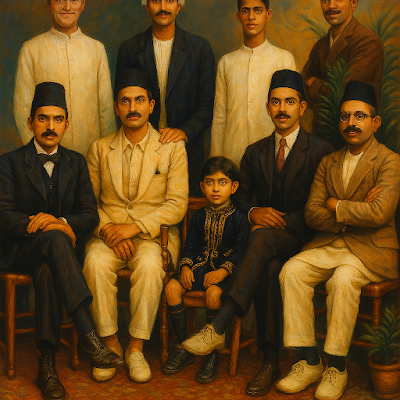
Group photograph with individuals seated from the right: Dr. Mirza Madad Ali Beg, Syed Abdul Hussain Shah Musavi, Qazi Ahmad Hussain (son of Dr. Qazi Ali Ahmad), Syed Atta Hussain Shah Musavi, and Dr. Qazi Ali Ahmad. Seated from the left: Mirza Ali Muhammad, Mirza Ali Bux Kausar, Mirza Gul Ahsan Karbalai, and Qazi Muhammad Hassan.

In 1921, Dr. Muddassir Ali Beg, alongside Syed Ata Hussain Shah Musawi, launched the magazine Sirat-e-Mustaqeem from Rohri. This publication likely served as a platform for literary and intellectual discourse, contributing to Sindh's cultural growth, though detailed records are scarce.


Magazine 'Sirat-e-Mustaqeem'

In 1921, Dr. Muddassir Ali Beg, alongside Syed Ata Hussain Shah Musawi, launched the magazine Sirat-e-Mustaqeem from Rohri. This publication likely served as a platform for literary and intellectual discourse, contributing to Sindh's cultural growth, though detailed records are scarce.

Sample Poetry

Here’s a translated excerpt of his poetry, celebrating the beauty and tranquility of night:

The night shines with light,
Bringing peace to the soul,
See how the garden blooms and sways,
Smiling flowers, a beautiful night,
A radiant veil of light glows,
I say the night is beautiful,
The garden and sea’s charm is captivating,
The night enhances beauty,
Every sight doubles in splendor,
The night amplifies allure,
For lovers, I truly say 'Mudd',
The reflection of beauties, the night is beautiful.

This poem highlights his ability to capture nature’s serenity.

Legacy

Dr. Muddassir Ali Beg 'Mudd' passed away on May 18, 1930, while running his clinic in Tando Agha's Hyderabad, where he was buried. Despite his short life, his contributions to medicine and literature left a profound impact on the Sindhi community.

Conclusion

Dr. Mirza Muddassir Ali Beg 'Mudd' was a multifaceted personality who excelled in medicine and literature. His poetry and novels enriched Sindhi culture, while his medical services exemplified his dedication to his people. Though less known today, his works and memory live on among Sindhi literature enthusiasts and his family.

References: Sindhi literary archives, local historical records (further research recommended).


Post: Sayed Sajjad Hussain Musavi

© 2025 Discover Rohri The Ancient City of Sindh

Dr. Mirza Muddassir Ali Beg, Sindhi poet, Sindhi literature, 20th-century Sindhi writers, Tando Agha's hospital, Sirat-e-Mustaqeem magazine.
#SindhiPoet, #DrMuddassirAliBeg, #SindhiLiterature, #TandoAgha, #20thCenturyWriters

Muharram 2025: Sindh Imposes Section 144 Restrictions for Security

Sindh Government Imposes Section 144 Restrictions During Muharram 2025

Introduction

Muharram, the first month of the Islamic calendar, holds profound significance for Muslims worldwide, particularly for the Shia community, who observe it as a period of mourning to honor the martyrdom of Imam Hussein, the grandson of Prophet Muhammad, at the Battle of Karbala in 680 CE. In Pakistan, especially in Sindh, Muharram is marked by numerous processions, majalis (religious gatherings), and tazia rituals, which draw large crowds. These events, while deeply spiritual, necessitate stringent security measures to ensure public safety and maintain law and order, given the potential for sectarian tensions or disruptions.

Sindh Government notification dated June 25, 2025, enforcing security measures under Section 144 for Muharram 2025, including bans on unauthorized gatherings and hate speech.
Official Muharram 2025 Security Measures by Sindh Government

Announcement of Restrictions

To safeguard peace during Muharram 2025, the Government of Sindh has issued a notification imposing restrictions under Section 144 of the Criminal Procedure Code (Cr.PC). These measures, effective from the 1st to the 10th of Muharram 1447 Hijri (June 26 to July 5, 2025, in the Gregorian calendar), aim to prevent any activities that could incite violence or disrupt public order. The restrictions are part of a broader strategy to facilitate the solemn observances of Muharram while ensuring the safety of all citizens across the province, including major cities like Karachi.

Details of Restrictions

The notification outlines a comprehensive set of prohibitions and regulations to ensure a peaceful Muharram. Below is a detailed breakdown of the measures:

Restriction Details

  • Use of Loudspeakers

Unlawful use of loudspeakers is banned, with strict legal consequences under "The Sindh Sound System (Regulation) Act 2015." A specific code of conduct governs loudspeaker use during processions.

  • Hate Speech and Provocative Materials
Complete ban on speeches, wall chalking, posters, banners, leaflets, audios, videos, or any materials promoting hatred, violence, or sectarian discord. Sale and circulation of inflammatory content are also prohibited.

  • Roof-top Presence
Unauthorized persons on rooftops during events are prohibited to prevent potential security threats.

  • Unpermitted Gatherings and Processions
Processions, rallies, majalis, jalsa, and tazia require prior permits. Unauthorized gatherings are strictly banned.

  • Assembly Restrictions
Gatherings of five or more persons are prohibited, except for authorized Muharram events.


  • Pillion Riding
Banned on the 9th and 10th of Muharram, with exemptions for women, children under 12, senior citizens, differently-abled persons, journalists, law enforcement personnel, and essential service employees.

  • Carrying Arms
Carrying arms and ammunition is prohibited, except for law enforcement and security personnel on duty. All existing weapon permits are suspended during this period.

  • Use of Drones and Heli-Cams
Unauthorized use of drones and heli-cams is banned, particularly around religious gatherings and processions.

  • Sermons and Speeches
Religious scholars may deliver sermons only after obtaining prior approval from authorities.

Additional Security Measures

Beyond the prohibitions, the Sindh government has implemented enhanced security protocols:

  • Surveillance and Monitoring: Intensified surveillance along procession routes, with monitoring of hotels, markets, and rooftops. Individuals on the Fourth Schedule (suspected of terrorism-related activities) are closely watched.
  • Security for Religious Sites: Sensitive imambargahs and mosques receive comprehensive security, including heavy deployment of police and Rangers, signal jammers, and drone surveillance on key routes.
  • Emergency Preparedness: Hospitals are on high alert, with ambulances and fire brigades on standby to respond to any incidents.
  • Peace Committees: Activated at district and local levels to promote inter-sect harmony, with community leaders encouraged to support these efforts.
  • Media Restrictions: Only designated officials are permitted to interact with the media regarding security matters to ensure accurate communication.

Enforcement

Station House Officers (S.H.Os) of concerned police stations are authorized to register complaints under Section 188 of the Pakistan Penal Code (PPC) against violators of Section 144 Cr.PC. Law enforcement agencies, including police and Rangers, are on high alert to enforce these measures. The government has also mandated that a detailed district-wise report on registered cases be submitted to the Home Department by the 15th of Muharram.

Significance of Muharram in Pakistan

Muharram is one of the four sacred months in Islam, during which warfare is traditionally forbidden. For Shia Muslims, the 10th day, known as Ashura, is a day of mourning commemorating the martyrdom of Imam Hussein and his companions at Karbala. In Pakistan, this period sees large-scale processions and gatherings, particularly in Sindh, where the Shia community is significant. The government typically announces holidays on the 9th and 10th of Muharram to facilitate these observances, with schools, banks, and offices closed. However, the intensity of these events requires robust security to prevent any incidents that could disrupt the solemnity or lead to unrest.

Community Cooperation

The success of these security measures relies heavily on community cooperation. The Sindh government has urged religious and community leaders to work with authorities to maintain peace and promote harmony. Citizens are encouraged to adhere to the restrictions, obtain necessary permits for events, and report any suspicious activities to ensure a safe environment for all during Muharram.

Conclusion

The imposition of Section 144 restrictions during Muharram 2025 reflects the Sindh government’s commitment to ensuring a peaceful and secure environment during this significant religious period. By addressing potential security threats and regulating public activities, the authorities aim to facilitate the solemn observances of Muharram while safeguarding the well-being of all citizens. Community cooperation is vital to the success of these measures, ensuring that Muharram 2025 is observed with the respect and tranquility it deserves.


Muharram 2025, Sindh, Section 144, restrictions, law and order, Pakistan, processions, gatherings, security measures, Imam Hussein, Battle of Karbala, Shia community, public safety, peace, notification, Home Department, pillion riding, loudspeakers, hate speech, drones, surveillance, police, Rangers, peace committees.

For official links and verified reference materials related to the Muharram 2025 restrictions in Sindh, Pakistan, the following resources can be consulted:


- Government of Sindh Official Website: The primary source for official notifications, including the Section 144 restrictions, can be found on the Sindh Home Department's page at [www.sindh.gov.pk](https://www.sindh.gov.pk). Look for the latest notifications under the Home Department section for the Muharram 2025 guidelines.


- Pakistan Bureau of Statistics (PBS): For statistical and official data, the PBS library provides access to government publications and reports. Visit [www.pbs.gov.pk](https://www.pbs.gov.pk) for archived documents and gazette notifications.


- Library of Congress: This offers a vast collection of digitized books and manuscripts, including historical studies on Sindh and Muharram observances. Explore the catalog at [www.loc.gov](https://www.loc.gov) using search terms like "Sindh Muharram" or "Pakistan Islamic history" for relevant titles such as "Karbala Karbala: Kalam" or "Sindh: Itihasa, Samskrti evam Sahitya."


- UrduPoint and HamariWeb: These platforms provide updated Islamic calendar dates and official holiday announcements for Muharram 2025 in Pakistan. Check [www.urdupoint.com](https://www.urdupoint.com) and [www.hamariweb.com](https://www.hamariweb.com) for verified dates of 1st Muharram and Ashura.


For authoritative books, consider the following verified references available through libraries or online archives:

- "Karbala Karbala: Kalam"- A collection of articles on the 10th of Muharram in Sindh, focusing on Imam Hussein’s martyrdom and Sindhi elegiac poetry.

- "Sindh: Itihasa, Samskrti evam Sahitya" by Rashmi Ramani - A detailed history of Sindhi literature and civilization, including religious practices.

- "Ta’rikh-e-Sindh" - Historical accounts of Sindh, covering cultural and religious events like Muharram.


These sources provide official and verified information. For the most current updates, refer to the Sindh government’s official notifications or local news outlets following the Ruet-e-Hilal Committee’s moon sighting announcements.


Post: Sayed Sajjad Hussain Musavi

© 2025 Discover Rohri The Ancient City of Sindh

#Muharram2025 #SindhGovernment #Section144 #LawAndOrder #Pakistan #SecurityMeasures #PeacefulMuharram #ImamHussein #Karbala #ShiaCommunity #PublicSafety

Thank you for reading my article. I would really appreciate it if you could also share your opinion