The Top 5 Historic Sites in Rohri You Can’t Miss!

Tuesday, 22 July 2025

Unveiling the Rich History of the Pakistani River System

Unveiling the Rich History of the Pakistani River System

Rivers are the lifeblood of Pakistan, weaving through its landscape and history. They have shaped the country's geography and culture for centuries. The Pakistani river system is a marvel of nature and human ingenuity.

The Indus River, the longest river in Pakistan, is central to this system. It supports millions of people and countless ecosystems. Its tributaries, like the Sutlej River, play vital roles in agriculture and daily life.

These rivers are not just water sources; they are cultural icons. They hold spiritual significance and are woven into the folklore and traditions of the region. Sites like Sadh Belo and Sateen Jo Aastan are testament to this deep connection.

The river system also faces challenges. Climate change, pollution, and overuse threaten its health and sustainability. Yet, efforts are underway to conserve and protect these vital waterways.

Engineering feats like the Sukkur Barrage or Lloyd Barrage showcase human efforts to harness river power. These structures are crucial for irrigation and flood control, supporting agriculture and livelihoods.

The rivers are home to unique wildlife, including the endangered Indus River Dolphin. They also support diverse fish species, such as the popular Palla fish.

Understanding the Pakistani river system is key to appreciating the country's natural and cultural heritage. This article explores the rich history and significance of these rivers. Join us on this journey through Pakistan's waterways.
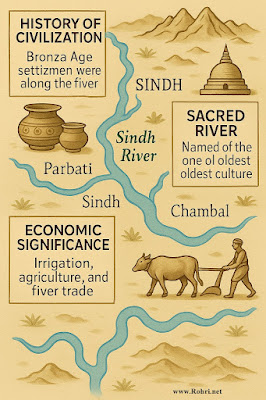
Illustrated map showing the Sindh River and its historical, sacred, and economic importance in Pakistan, featuring pottery, a temple, a farmer with a bull, and labeled tributaries like Parbati and Chambal.
An illustrated map highlighting the Sindh River’s role in ancient civilization, spiritual heritage, and agricultural economy part of Pakistan’s vast river system.


Overview of Pakistani Rivers

Definition and Importance

The Pakistani river system is a complex network of rivers and tributaries. It forms a significant part of the Indus River Basin. This basin ranks among the largest in the world, covering a vast geographical area.

Rivers in Pakistan are crucial to the country's ecology and economy. They serve as main water sources for agriculture, industry, and domestic use. This makes them indispensable for the livelihood of millions.

The rivers support a rich variety of life. They are home to unique species like the Indus River Dolphin. The river systems also support vibrant plant communities along their banks, contributing to the region's biodiversity.

Moreover, these rivers hold great cultural and spiritual value. Many communities depend on them for religious practices and cultural traditions. They are a source of inspiration, evident in many art and literary works.

The following aspects highlight the importance of Pakistani rivers:

  • Water supply for agriculture and drinking
  • Habitat for diverse flora and fauna
  • Cultural significance in traditional practices
  • Facilitates trade and transportation
  • Inspiration for art and literature

Understanding these rivers is essential. They hold the key to Pakistan's past, present, and future. Their management and conservation impact the country's development and ecological balance.

Major Rivers in Pakistan

Pakistan is home to several major rivers, each with its unique role. The Indus River is by far the biggest and most important. It runs nearly 3,180 kilometers, influencing the country's geography and history.

The Indus River has several significant tributaries. Among them, the Sutlej River stands out. It is vital for irrigation and is one of the longest tributaries of the Indus. Another crucial river is the Jhelum, known for its scenic beauty and historical significance.

Apart from these, the Chenab and Ravi Rivers play key roles. They irrigate wide areas, supporting agriculture and communities in the region. These rivers ensure water supply stability, which is critical in a predominantly agrarian economy.

The Kabul River is another notable waterway. It merges with the Indus near Attock and is important for its strategic geographical location. It provides water and influences trade and transportation routes.

Key Pakistani rivers include:

  • Indus River: Longest and most vital.
  • Sutlej River: Key for irrigation.
  • Jhelum River: Scenic with historical value.
  • Chenab and Ravi Rivers: Agriculture support.
  • Kabul River: Strategic importance.

These rivers define Pakistan's landscape. They are lifelines connecting people and nature, fostering culture, and sustaining economies. Their histories are rich, and their futures are full of potential, depending on sustainable practices and policies.

The Indus River Basin

Geographical Features

The Indus River Basin covers an area spanning over 1.1 million square kilometers. It's one of the largest river basins globally, stretching across Pakistan, India, China, and Afghanistan. This vast area includes diverse landscapes, from the towering peaks of the Himalayas to the sprawling plains of Sindh.

The Indus River originates in Tibet, flowing through the Ladakh region in India before entering Pakistan. Within Pakistan, it traverses several provinces, touching a variety of ecosystems and contributing to the nation's geography. The river supports extensive agricultural activities, particularly in the fertile Punjab and Sindh plains.

The basin's geography features numerous tributaries. These include major rivers such as the Jhelum, Chenab, Ravi, Beas, and Sutlej. These tributaries enhance the basin's complexity, providing rich soil and abundant water resources vital for agriculture.

Noteworthy geographical elements of the Indus River Basin include:

  • Mountain ranges: Origin in the Himalayas
  • Plains: Fertile lands of Punjab and Sindh
  • Tributaries: Jhelum, Chenab, Ravi, Beas, Sutlej
  • Deserts: Thar Desert's influence on the basin

This geographical diversity makes the Indus River Basin a significant natural resource. It supports millions of people, providing water for irrigation, electricity generation, and domestic consumption.

Historical Significance

The Indus River Basin has shaped historical narratives throughout South Asia. It was the cradle of the ancient Indus Valley Civilization, one of the world's earliest urban societies. This civilization thrived around 2600-1900 BCE, with major cities like Harappa and Mohenjo-Daro flourishing along the river.

Throughout history, the basin served as a critical trade route. The river facilitated economic exchanges and cultural interactions between South Asia, the Middle East, and Central Asia. This trade played a pivotal role in connecting disparate regions and fostering development.

The river basin held immense strategic importance during the colonial period. Control over this waterway meant control over lucrative agricultural and trade resources. British colonial infrastructure, like the construction of canals and barrages, marked the river's role in imperial economic strategies.

Today, the basin remains influential in geopolitical dynamics. India and Pakistan's water-sharing agreements stem from historical legacies. These arrangements underscore the river's ongoing economic and political significance.

Key historical periods tied to the Indus River Basin include:

  • Indus Valley Civilization: 2600-1900 BCE
  • Trade networks: Connecting South Asia and beyond
  • Colonial era: Infrastructure development under British rule
  • Current geopolitical influences: Water-sharing agreements

The basin's history is rich and multilayered, impacting Pakistan's cultural and historical heritage profoundly.

Ecosystem and Biodiversity

The Indus River Basin hosts a remarkable range of ecosystems, nurturing unique biodiversity. It spans diverse habitats such as forests, wetlands, floodplains, and deserts. Each ecosystem contributes to the basin's overall environmental health and resilience.

Forests along the river are home to numerous plant species, providing timber and non-timber products. Wetlands serve as crucial breeding grounds for fish and birds. They also act as natural filters, improving water quality and safeguarding against floods.

Biodiversity thrives with species adapted to the region's varied environments. Among them are critically endangered species like the Indus River Dolphin. Populations of numerous bird species migrate through the basin, making it a vital stopover on global migratory routes.

Challenges to ecosystem balance include pollution, habitat destruction, and overfishing. Climate change also poses significant threats, altering weather patterns and impacting water flow.

Key ecosystems in the Indus River Basin include:

  • Forests: Biodiverse habitats for flora and fauna
  • Wetlands: Essential for fish and bird species
  • Floodplains: Support agriculture and wildlife
  • Deserts: Unique arid ecosystems within the basin

Understanding these ecosystems' roles helps drive conservation efforts. Protecting biodiversity ensures sustainable development and the health of the Indus River Basin.

Pakistani River Fish

The rivers of Pakistan teem with a variety of fish species, vital to local diets and economies. Fishing has long been both a livelihood and a tradition along these waterways. The numerous fish species contribute significantly to Pakistan's food security and economy.

The Indus River, in particular, hosts unique fish species. Among them is the Palla fish, highly valued for its taste and commercial importance. The Mahseer, known for its size and strength, is another notable species found in northern rivers.

Fishing practices along these rivers are traditional and cultural. Local communities rely on sustainable fishing methods, balancing ecological preservation with economic needs. Despite this, challenges like overfishing and pollution threaten fish populations.

Efforts to conserve these species focus on sustainable practices and pollution reduction. Ensuring fish populations remain stable supports both biodiversity and the livelihoods dependent on them.

Significant fish species in Pakistani rivers include:

  • Palla Fish: Highly valued for taste and commercial use
  • Mahseer: Noted for size and strength
  • Catfish: Popular in local cuisines
  • Rohu: Known for its flavor and size

The sustenance of these fish populations is critical. They highlight the ecological wealth of Pakistani rivers and their importance to cultural heritage and economic stability.

Indus River Dolphin

The Indus River Dolphin is an iconic species found exclusively within the Indus River. This cetacean is critically endangered, with a current population confined to select river sections in Pakistan. It's known for its unique features, including a long snout and low, triangular dorsal fin.

Adapted to river life, the dolphin navigates and hunts in turbid waters using echolocation. It feeds on a variety of fish and invertebrates, playing a vital role in maintaining riverine health. However, threats like habitat destruction and water pollution jeopardize its survival.

Conservation efforts focus on habitat protection and restoration. Initiatives aim to improve river water quality and ensure sustainable water management practices. The dolphin serves as a keystone species; its health reflects the Indus River's ecological status.

Essential facts about the Indus River Dolphin include:

  • Endemic: Found only in the Indus River
  • Critically Endangered: Threatened by habitat loss and pollution
  • Echolocation: Vital for navigation and hunting
  • Keystone Species: Indicates river ecosystem health

Protecting this species is critical. It symbolizes broader conservation challenges and efforts within the Indus River system.

Rohu, Mori, Palla, and Mali

The diverse fish species in Pakistani rivers contribute greatly to local biodiversity. Among the prominent fish are the Rohu, Mori, Palla, and Mali, each having ecological and economic importance. These species are integral to local fisheries and culinary traditions, enriching cultural heritage.

Rohu is a key species found in the freshwater ecosystems of Pakistan. It's well-liked for its size and taste, making it a staple in diets across the region. Similarly, Mori plays a significant role in local fisheries, known for its adaptability to various water conditions.

Palla fish is particularly cherished, especially in Sindh, where it is synonymous with cultural celebrations. Its migratory nature is vital for understanding fish life cycles and river health.

Mali, though lesser-known globally, is valued locally. It thrives in clean river stretches, underscoring the importance of water quality in maintaining fish populations.

Key aspects of these fish species include:

  • Rohu: Staple in regional diets
  • Mori: Adaptable and prevalent in fisheries
  • Palla: Culturally significant in Sindh
  • Mali: Indicator of clean water environments

These fish not only support local economies but also help illustrate the ecological richness of Pakistani rivers. Managing their populations sustainably is crucial for maintaining biodiversity and cultural practices dependent on these water resources.

The Role of Monsoon Rains

Impact on River Flow

Monsoon rains profoundly influence river systems in Pakistan, transforming dry riverbeds into surging waterways. These seasonal rains typically occur between June and September, significantly affecting water volumes. Rivers such as the Indus swell during this period, replenishing water reservoirs and supporting agriculture.

The increase in river flow from monsoons is critical for Pakistan's agriculture. Farmers depend on these rains for irrigating crops, particularly in the fertile plains of Punjab and Sindh. The predictable rise in water levels ensures a productive growing season.

However, the variability of monsoon rains can be a double-edged sword. Inconsistent or delayed rains can disrupt agricultural cycles, leading to crop failures and economic challenges. Understanding monsoon patterns is essential for effective water management and planning.

Key impacts of monsoon rains on river flow include:

  • Increased river volume: Vital for agriculture
  • Hydroelectric power production: Enhanced by strong river flow
  • Predictable seasonal changes: Crucial for planning agriculture

The interdependence between monsoon rains and river flows underscores the necessity of adaptive strategies to navigate these natural cycles effectively.

Flooding and Ecosystems

Monsoon rains, while beneficial, often lead to flooding, profoundly impacting ecosystems. Floods can inundate vast areas, transforming landscapes and affecting both human and wildlife populations. The sudden surge in water challenges the riverbanks, altering habitats and causing displacement.

Floods benefit ecosystems by depositing nutrient-rich silt on floodplains, enriching soil fertility. This natural process supports diverse plant and animal life. However, the severity and frequency of floods can disrupt this balance, leading to habitat destruction and loss of biodiversity.

Wildlife, such as the Indus River Dolphin, faces increased threats during floods due to habitat instability. Smaller streams and tributaries often become overrun, impacting fish migration patterns and breeding grounds.

Flood-related impacts on ecosystems include:

  • Soil enrichment: From nutrient deposition
  • Habitat disruption: Affects flora and fauna
  • Altered migration patterns: For fish and other species

Balancing flood management with ecological preservation is crucial. This balance allows the benefits of floods to be harnessed while minimizing adverse effects on ecosystems.

Historical Flood Events

Historical floods in Pakistan highlight both the power of nature and the resilience of its people. These events, driven by monsoon rains, have shaped landscapes and communities. The 2010 floods were particularly devastating, affecting 20 million people and submerging nearly a fifth of the country.

Such events underscore the ongoing challenges of flood management. Infrastructure, like the Sukkur Barrage, plays a critical role in mitigating flood impacts. However, the increasing intensity of floods due to climate change requires adaptive strategies.

Communities have historically adapted by building resilient agricultural practices and flood-resistant infrastructure. Lessons learned from past floods guide current and future preparedness strategies.

Notable historical flood events include:

  • 2010 floods: Massive humanitarian impact
  • 1988 floods: Widespread infrastructure damage
  • Flood management strategies: Evolved over decades

Analyzing past flood events provides valuable insights for enhancing resilience and reducing future vulnerabilities, ensuring that societies can thrive despite natural adversities.

Notable Structures and Barrages

Sukkur Barrage

The Sukkur Barrage, built during British colonial rule, is a vital structure in Pakistan's irrigation system. It spans the mighty Indus River near the city of Sukkur in Sindh province. Completed in 1932, it remains one of the world's largest barrages, serving as a cornerstone for regional agriculture.

This barrage channels water to a network of seven major canals, irrigating over 10 million acres of fertile land. The massive scale and engineering of the Sukkur Barrage have transformed arid landscapes into thriving farmland. It's a testament to human ingenuity and foresight in water management.

Maintenance and modernization remain critical for the Sukkur Barrage. Challenges include sediment build-up and structural integrity issues. Continual updates ensure it meets the demands of a growing population and changing climate conditions.

Key features of the Sukkur Barrage include:

  • Seven major canals: Irrigate vast agricultural land
  • Strategic location: Vital for Sindh's agriculture
  • Historical significance: Engineering marvel from colonial times

Continued investment in infrastructure is essential to maintaining its pivotal role in Pakistan's economy and food security.

Lloyd Barrage

The Lloyd Barrage, another important irrigation structure, is synonymous with the city of Sukkur. Named after the British Engineer Sir George Ambrose Lloyd, it symbolized early 20th-century engineering advancements. The barrage aimed to control the Indus River's flow, facilitating irrigation.

Through its complex canal network, the Lloyd Barrage irrigates extensive agricultural fields, supporting Pakistan's agrarian economy. It is crucial for the cultivation of wheat, cotton, and sugarcane in the region, playing a vital role in sustaining local livelihoods.

Despite the challenges of time and changing environmental conditions, the barrage continues to function efficiently. Regular maintenance and adaptations to climate variability ensure its operational success.

Important aspects of the Lloyd Barrage include:

  • Canal network: Essential for crop irrigation
  • Historical engineering: A legacy of British infrastructural projects
  • Economic impact: Supports major cash crops

The ongoing relevance of the Lloyd Barrage highlights the necessity of preserving historical infrastructure in advancing modern agricultural practices.

Eastern Naro Canal and Rohri Canal

The Eastern Naro Canal and Rohri Canal are integral parts of the Indus irrigation network. These canals extend the reach of water management, providing essential irrigation to adjoining areas. Their construction has had a transformative impact on local agriculture and communities.

The Eastern Naro Canal contributes to regional water distribution, catering to lands that would otherwise remain arid. Its design reflects an understanding of local topography, ensuring efficient water flow across varying terrains. This adaptability makes it a significant asset for irrigation efforts.

The Rohri Canal, stemming from the Sukkur Barrage, enhances agricultural productivity in its path. Its waters nourish fields, fostering the growth of diverse crops. This canal exemplifies the effectiveness of planned irrigation in turning challenging environments into productive farmland.

Key characteristics of these canals include:

  • Extended irrigation coverage: Supporting local agriculture
  • Terrain adaptability: Optimizes water flow
  • Agricultural enhancement: Boosts productivity in dry regions

These canals serve as lifelines for farming communities, embedding themselves as indispensable components of Pakistan's agricultural landscape.

Cultural and Historical Landmarks

Khawaja Khzir and Sadar Ur Din Shah

Khawaja Khizr is a mystical figure rooted in South Asian lore. Often considered the guardian of water bodies, Khawaja Khizr's presence is deeply entrenched in riverine culture. This figure represents wisdom and protection, offering spiritual guidance to those traveling or living near rivers.

Sadar Ur Din Shah, a revered local figure, is associated with religious significance along riverbanks. His legacy includes tales of devotion and miracles, drawing pilgrims to sites near the Indus River. These locations serve as spiritual havens, connecting communities through shared beliefs.

Key elements of Khawaja Khizr and Sadar Ur Din Shah include:

  • Spiritual symbolism: Emphasizes protection and wisdom
  • Cultural impact: Celebrates water's sacredness in folklore
  • Pilgrimage sites: Attracts believers to revered river locations

Both figures embody the union of spirituality and culture. Their stories continue to inspire reverence for rivers within Pakistani society.

Lakhian Jo Daro and Zinda Pir

Lakhian Jo Daro is an archaeological wonder near the Indus River. The site unveils layers of civilization dating back millennia, offering a glimpse into ancient times. Excavations reveal urban planning, artifacts, and structures, emphasizing the historical depth of river societies.

Zinda Pir, another landmark, integrates spiritual tradition with history. The shrine, nestled along the river, honors revered saints whose teachings echo through time. Visitors find solace and reflection in its sacred precincts, making it a living testament to cultural heritage.

Key highlights include:

  • Historical insights: Lakhian Jo Daro's archaeological findings
  • Cultural preservation: Zinda Pir's enduring legacy
  • Community linkage: Both sites promote unity and identity

These landmarks underscore the rich tapestry of history and spirituality along Pakistan's rivers.

Sateen Jo Aastan and Lansdowne Bridge

Sateen Jo Aastan is a historical spiritual site along the banks of the Indus River. Known for its serene surroundings, it offers a place for meditation and worship. The site is linked to tales of devotion and mysticism, enriching the cultural landscape of the region.

Lansdowne Bridge, connecting Sukkur and Rohri, stands as an engineering feat from the colonial era. Completed in 1889, it was among the first cantilever bridges in South Asia, showcasing architectural brilliance. The bridge facilitated trade and movement, fostering economic growth in the area.

Key aspects of Sateen Jo Aastan and Lansdowne Bridge include:

  • Spiritual tranquility: Sateen Jo Aastan's peaceful retreats
  • Architectural marvel: Lansdowne Bridge's historical significance
  • Economic role: Bridge supports regional commerce

Together, these sites blend history, culture, and progress, forming an integral part of Pakistan's riverine heritage. The stories and structures tell of a dynamic past, where spirituality and technological advancement coalesce by the riverside.

Conclusion: The Future of Pakistan’s Rivers

Conservation Efforts

The conservation of Pakistani rivers is vital for the nation's ecological health. Recent efforts focus on sustainable management and rehabilitating degraded ecosystems. These initiatives aim to balance human needs with nature preservation, ensuring a thriving environment.

Government and non-government organizations collaborate extensively in conservation projects. They tackle challenges like pollution, habitat loss, and over-extraction of water resources. Education and community involvement are crucial, empowering local populations to participate actively in protecting their river systems.

Key conservation activities include:

  • Pollution control: Implementing stricter regulations on industrial waste
  • Habitat restoration: Replanting native vegetation along riverbanks
  • Community engagement: Educational programs raising awareness about sustainable practices

These focused actions represent an ongoing commitment. The aim is to restore the vitality of Pakistan’s rivers, fostering biodiversity and supporting future generations.

Challenges and Opportunities

Pakistan's river systems face several daunting challenges. Climate change, unchecked urban expansion, and agricultural demands put immense pressure on water resources. Persistent pollution further exacerbates ecosystem degradation, threatening both wildlife and human communities.

Despite these challenges, opportunities abound. Technological innovations offer solutions for better water management and pollution control. Moreover, evolving policies aim to integrate sustainable practices into economic growth, aligning development goals with environmental stewardship.

Addressing these challenges requires:

  • Innovative technology: Investing in advanced water purification systems
  • Policy reform: Creating inclusive strategies for sustainable development
  • Collaboration: Strengthening partnerships between stakeholders across sectors

Capitalizing on these opportunities can significantly mitigate threats. By steering towards a future where rivers are protected and cherished, Pakistan can secure its water heritage and build resilience against environmental uncertainties. This vision ensures the river systems remain lifelines for communities and ecosystems alike.


Post: Sayed Sajjad Hussain Musavi
© 2025 Discover Rohri The Ancient City of Sindh 
#indus #dolphine #river


Sunday, 20 July 2025

The Eastern Naro Canal: A Historical and Geographical Marvel of Sindh

The Eastern Naro Canal: A Historical and Geographical Marvel of Sindh

Introduction

The Eastern Naro Canal, often referred to as the Hakro River or locally as "Karo Naro" (Black Canal), is a vital waterway in Sindh, Pakistan. Originating from Rohri city, this canal connects to the Sukkur Barrage and follows the ancient course of the Hakro River. Constructed during the British colonial period, it transformed an arid landscape into fertile farmland. This article explores its rich history, geographical significance, and modern-day challenges, making it a fascinating subject for history and geography enthusiasts.

Dilapidated inauguration plaque of the Hakro River, also known as Karo Naro (Black Canal).
This dilapidated plaque marks the inauguration of the Hakro River, also known as 'Karo Naro' or the Black Canal. Once a vital waterway in Sindh, Pakistan, the river's legacy is now fading, much like this neglected marker that stands as a testament to its historical significance.


Historical Background

The Eastern Naro Canal’s story begins in 1853 when the British government initiated its construction to irrigate the dry lands east of Rohri. Stretching 12 miles, the canal was completed in June 1859 at a cost of 5 lakh rupees. It linked the Indus River to the ancient bed of the Hakro River, a once-mighty waterway that dried up around 1226 AD. Historians believe the Hakro was a branch of the Sutlej River that once nourished the Thar region before shifting its course.

In 1859, Lieutenant Fife engineered the canal’s connection to the Indus, turning the old riverbed into an irrigation channel. By 1873, Colonel Le Mesurier oversaw upgrades, widening the canal to 156 feet and reinforcing its banks with stone pitching, costing 7,18,348 rupees. Further improvements in 1893 deepened it by half a foot and modernized its regulatory gates. When the Sukkur Barrage was completed in 1932, the original 12-mile canal was decommissioned, and the Eastern Naro was directly linked to the barrage, enhancing its irrigation capacity to a peak flow of 8,413 cubic feet per second.

Geographical Significance

The Eastern Naro Canal traces the path of the ancient Hakro River, which once flowed from the Himalayas through Sindh, irrigating the Thar Desert and parts of Rajasthan. Known by various names like Ghaggar, Sarasvati, and Naru, it supported lush vegetation and thriving settlements before drying up, leaving behind the arid Thar landscape. The canal’s revival of this riverbed brought water back to the region, making agriculture possible in areas like Rohri and beyond.

Today, it serves as both an irrigation lifeline and a drainage channel for rainwater and urban waste, though this dual role has led to pollution concerns. The canal’s historical connection to the Hakro River underscores its role in shaping Sindh’s geography and sustaining its agrarian economy.

Modern Developments and Challenges

While the Eastern Naro Canal remains essential for irrigation, its modern history is marked by challenges. After its integration with the Sukkur Barrage in 1932, the original canal route saw changes, including the construction of two bridges one for regulation and another for a railway line that operated until the 1977 floods. Over time, urban growth has encroached upon its banks, and pollution from sewage and industrial runoff has darkened its waters, earning it the name "Karo Naro."

Efforts to maintain the canal have been sporadic, with debris and illegal settlements reducing its efficiency. Despite these issues, it continues to support Sindh’s farmers, highlighting the need for conservation and cleanup initiatives.

Conclusion

The Eastern Naro Canal is a blend of historical ingenuity and geographical importance. From its British-era origins to its modern role in Sindh’s agriculture, it stands as a symbol of human efforts to harness nature. Preserving this canal is crucial not only for its practical benefits but also for honoring the legacy of the ancient Hakro River it follows.

Reference Links or Books

  • Sindh: A General Introduction by H.T. Lambrick – For historical context.
  • The Indus Rivers by Aloys Arthur Michel – Insights into Sindh’s waterways.
  • Sukkur Barrage – Wikipedia – Basic overview.
  • Contributor: Imdad Hussain Shah Kotahi Rohri.
Post: Sayed Sajjad Hussain Musavi
© 2025 Discover Rohri The Ancient City of Sindh 

Eastern , Hakro River, Karo Naro, Sukkur Barrage, Sindh, Pakistan, irrigation, British colonial history, Thar Desert, agriculture

 #easternnarocanal #hakroriver #karonaro #sukkurbarrage #sindh #pakistan #irrigation #history #geography

Saturday, 19 July 2025

Current Weather and Flood Situation in Rohri and Sukkur: Updates & Tips

Current Weather and Flood Situation in Rohri and Sukkur: What You Need to Know

If you're searching for "weather rcw rohri," "sukkur flood situation," or "flood in sukkur today," you’ve come to the right place. Staying informed about the weather in Rohri and Sukkur, two cities along the Indus River in Pakistan, is essential due to their susceptibility to floods and changing climate conditions. In this article, we’ll explore the latest weather forecasts, flood updates, and practical tips to keep you prepared.

Rohri, Pakistan
Saturday, July 19, 2025
40°C
Sunny
High: 40°C, Low: 28°C
Wind: 36 km/h

Current Weather in Rohri and Sukkur

As of July 2025, the current weather in Rohri shows clear skies with a temperature of approximately 32°C, according to Weather Underground. The 10-day forecast predicts mostly sunny conditions with temperatures ranging from 30°C to 35°C, interspersed with occasional showers by the weekend. Similarly, Sukkur’s current weather features partly cloudy skies at 31°C, with AccuWeather forecasting a chance of rain in the coming days. These patterns align with the region’s typical monsoon season behavior.

For those near Ali Wahan (Rohri) or along the Rohri Bypass, expect similar conditions, though microclimates near the Rohri Canal may feel more humid due to rising water levels.

Flood Situation in Rohri and Sukkur

The Sukkur flood situation remains stable as of July 2025, with no immediate threats reported. However, the Flood Forecasting Division has issued a Sukkur flood warning for potential flash floods due to expected heavy rainfall in the coming days. Local sources note that the Rohri Canal water level today has risen, driven by increased pressure from the Indus River at Sukkur Barrage. This has raised concerns about erosion along the canal’s protective embankments, particularly in areas mapped on the Rohri Canal map.

Historically, the biggest flood in Pakistan, including the 2022 disaster, severely impacted Rohri and Sukkur. Today’s Sukkur flood news emphasizes proactive monitoring to avoid a repeat of such devastation. For the latest Sukkur flood update today, residents are urged to stay vigilant.

Local Weather Forecast for Rohri and Sukkur

A translated local report in Sindhi provides a detailed outlook:

  • Today: Rainfall begins in northern Sindh, including Rohri and Sukkur, with coastal areas and Tharparkar seeing rain by evening.
  • Tomorrow: Clouds will cover the region, with continuous rain expected throughout July 21, 2025. The system will intensify overnight.
  • Outlook: The rain will weaken by Sunday evening and end by Monday. Sukkur and Mirpurkhas divisions will be most affected, while Hyderabad and Shaheed Benazirabad may see light to moderate rain. In Larkana, heavy rain is unlikely unless influenced by clouds from Balochistan.

This aligns with forecasts for weather in Sukkur 10 days and current temperature in Rohri, emphasizing the need for preparedness.

Historical Context and Preparedness Tips

Located near the Indus River, Rohri district Sukkur and Sukkur Pakistan are prone to flooding, as seen in past events like the Sukkur floods of 2022. The Aror Rohri region, with its historical significance, also faces these risks. To survive potential floods:

  • Keep an emergency kit with essentials like food, water, and first aid.
  • Monitor updates from the Flood Forecasting Division.
  • Know evacuation routes from current location to Rohri or Sukkur.

Reference Links


#rohriweather, #sukkurflood, #pakistanmonsoon, #floodalert, #weatherRCWRohri

Thursday, 17 July 2025

The Art of Painting on Wood with Oil Colors: A Presentation by Moolchand Thatoomal Dewan

The Art of Painting on Wood with Oil Colors: A Presentation by Moolchand Thatoomal Dewan and the Legacy of Moolchand Das


Painting on wood with oil colors is a timeless art form that blends creativity with tradition. This technique, cherished by artists for centuries, produces vibrant, durable masterpieces that stand the test of time. In this article, we explore the history, techniques, and significance of wood painting with oil colors, spotlighting a remarkable presentation by Moolchand Thatoomal Dewan and the influence of Sayed Wadyal Hussain Shah Musavi from Rohri. Additionally, we highlight the contributions of Moolchand Das, a dedicated artist who continues to uphold this artistic legacy.

A detailed oil color painting on a wood sheet, showcasing vibrant colors and intricate details, created by Moolchand Thatoomal Dewan.
A stunning example of wood painting with oil colors by Moolchand Thatoomal Dewan, presented with the support of Sayed Wadyal Hussain Shah Musavi from Rohri.

History and Techniques of Wood Painting with Oil Colors

Wood painting has roots stretching back to ancient civilizations, with examples adorning Egyptian tombs and medieval European churches. The introduction of oil paints in the 15th century pigments mixed with linseed oil marked a turning point, offering artists unmatched versatility and longevity.

To create a wood painting, artists begin by preparing the surface. The wood is sanded smooth and coated with a primer or gesso to ensure an even base. Oil paints are then applied in layers, following the "fat over lean" principle: each layer contains more oil than the one beneath it, preventing cracking as the painting dries. This meticulous process results in rich, luminous artwork that endures for generations.

Moolchand Thatoomal Dewan: A Master of Wood Painting

Moolchand Thatoomal Dewan is a name synonymous with excellence in wood painting. Renowned for his skillful use of oil colors, Dewan’s works feature intricate details, vivid hues, and a masterful play of light and shadow. His latest contribution a picture painted on a wood sheet with oil colors stands as a testament to his artistry. This piece captures a serene landscape, showcasing the depth and beauty achievable with this medium.

A Masterpiece in Detail: The Portrait of Sayed Wadyal Hussain Shah Musavi

Among Dewan’s most celebrated works is an exquisite oil painting on wood depicting Sayed Wadyal Hussain Shah Musavi seated on an ornate chair, dressed in traditional attire with a turban and long coat. The chair, intricately carved and richly detailed, reflects the opulence of the setting, while Musavi’s attire rendered in deep, vibrant colors exudes a sense of dignity and grace. The background features domed architecture, symbolizing the cultural heritage of Rohri, and lush greenery that adds a touch of serenity. Swans glide gracefully in a tranquil water body, their presence enhancing the peaceful atmosphere, while a vase of flowers on a side table introduces a burst of color and life. This artwork showcases the craftsmanship of Moolchand Thatoomal Dewan, evident in every brushstroke from the delicate rendering of the swans’ feathers to the intricate patterns on the domed structures making it a true masterpiece of wood painting with oil colors.

Moolchand Thatoomal Dewan’s mastery of wood painting with oil colors has earned him recognition as a leading figure in the art world, with his works displayed in galleries and museums around the globe. His influence extends beyond his own creations, inspiring a new generation of artists, including Moolchand Das, to continue the tradition of wood painting.

Moolchand Das: Carrying Forward the Tradition

Moolchand Das, a protégé of Moolchand Thatoomal Dewan, has made significant contributions to the art of wood painting with oil colors. His works, characterized by their vibrant colors and intricate details, have been exhibited in galleries across the country. Das’s dedication to preserving and advancing this traditional technique has earned him a place among the most respected artists in the field. Through his art, Moolchand Das ensures that the legacy of wood painting with oil colors remains alive and thriving.

Sayed Wadyal Hussain Shah Musavi: A Patron from Rohri

In the historic city of Rohri, Sayed Wadyal Hussain Shah Musavi emerges as a key figure in the preservation of this art form. A passionate supporter of local talent, Musavi has championed artists like Moolchand Thatoomal Dewan and Moolchand Das, ensuring that traditional techniques like wood painting with oil colors continue to thrive. His patronage underscores the cultural richness of the region and its commitment to artistic heritage.

Conclusion

Painting on wood with oil colors is more than an artistic technique it’s a legacy. Through Moolchand Thatoomal Dewan’s breathtaking presentation, the dedicated work of Moolchand Das, and the support of Sayed Wadyal Hussain Shah Musavi from Rohri, this craft continues to inspire. Dive into this captivating world and uncover the beauty of wood painting for yourself.


For further exploration, consider these authoritative resources:

  • The Artist's Handbook of Materials and Techniques by Ralph Mayer
  • Oil Painting Techniques and Materials by Harold Speed


Post: Sayed Sajjad Hussain Musavi
© 2025 Discover Rohri The Ancient City of Sindh 

art, painting, oil colors, wood painting, Moolchand Thatoomal Dewan, Sayed Wadyal Hussain Shah Musavi.

#art, #painting, #oilcolors, #woodpainting, #moolchanddewan, #sayedwadyalhussainshahmusavi 

The Spiritual Legacy of Darbar Dastar Mubarak in Rohri: Sheikh Muhammad Hashim Siddiqui

The Spiritual Legacy of Dargah Dastar Mubarak in Rohri: A Tribute to Sheikh Muhammad Hashim Siddiqui

Introduction

The city of Rohri in Sindh, Pakistan, holds a significant place in the spiritual landscape of the region, largely due to the revered Dargah Dastar Mubarak. This sacred shrine, founded by the esteemed Sufi saints Sheikh Muhammad Hashim Siddiqui and his father Sheikh Muhammad Ilyas, both prominent figures of the Qadiri Sufi order, is a beacon of spiritual enlightenment. This article delves into the history, spiritual significance, and legacy of the Darbar, focusing on its founders, their sacred relics, and their lasting impact on the community. It also highlights the contributions of Ghulam Siddique Qadiri, a descendant who carried forward their legacy with distinction.

The Founders: Sheikh Muhammad Ilyas and Sheikh Muhammad Hashim

Sheikh Muhammad Ilyas and his son Sheikh Muhammad Hashim were towering figures in the Qadiri Sufi order, renowned for their piety and devotion. According to historical accounts, both saints were in Baghdad until 1092 AH (1681 CE), after which they migrated to Rohri. While the exact date of their arrival in Rohri remains undocumented, it is known that they passed away within a year of each other. Sheikh Muhammad Ilyas departed in 1109 AH (1697 CE), as noted in Farrukh Bargah, while Sheikh Muhammad Hashim followed in 1110 AH (1698 CE).

Their spiritual stature is well-documented. Syed Sheikh Ali, son of Syed Sheikh Ahmed Al-Qadiri Al-Hamawi, described Sheikh Muhammad Hashim as a "righteous man yearning for the hereafter" in his ijaza (spiritual authorization). Similarly, Sheikh Ibrahim bin Sheikh Ahmed Qadiri used nearly identical words in his ijaza, underscoring Sheikh Muhammad Hashim’s profound spiritual rank. These endorsements highlight their revered status within the Qadiri order.

Sacred Relics of Darbar Dastar Mubarak

The Darbar is renowned for housing sacred relics associated with Hazrat Abdul Qadir Jilani, the founder of the Qadiri Sufi order. These relics, brought by Sheikh Muhammad Hashim and Sheikh Muhammad Ilyas, include:

  • Dastar Mubarak (Holy Turban): A cherished relic of Hazrat Abdul Qadir Jilani.
  • Chola (Robe): A sacred garment attributed to the saint.
  • Tasbih (Prayer Beads): Used by Hazrat Abdul Qadir Jilani for devotion.
  • Quranic Manuscript: A Surah of the Quran written in Kufic script by Hazrat Ali (RA).
  • Quranic Manuscript by Imam Jafar Sadiq (RA): Another priceless relic preserved at the Darbar.

These relics are displayed for ziyarat (visitation) on the 11th night of Rabi-ul-Sani, an occasion marked by milad gatherings, recitations of naat and manqabat, and spiritual assemblies that draw devotees from far and wide. The sanctity of these relics underscores the Darbar’s role as a spiritual hub.

Historical Accounts and Spiritual Influence

The significance of the Darbar and its founders is well-documented in historical texts. Mir Ali Sher Qani, in his work Tuhfat-ul-Kiram, praises Haji Mir Khalifa Qadiri, a descendant of Sheikh Muhammad Hashim, as a figure of great spiritual eminence. The Darbar has been a center for spiritual gatherings, including monthly sufiana raag assemblies held on the 11th of each month. These gatherings, often attended by notable figures like Mir Abdul Qadir, a devoted disciple, continued until dawn, fostering a deep sense of spiritual connection.

Sir Richard Francis Burton, the famous explorer and scholar, visited Rohri in 1877 and documented his experience in Sindh Revisited. He describes being guided by Halimullah, a caretaker of the Darbar, who showed him the sacred relics, including the turban, robe, water bowl, and prayer beads of Hazrat Abdul Qadir Jilani, all wrapped in precious silk and brocade. Burton’s account highlights the reverence these relics commanded, noting that devotees offered donations to view them.

Ghulam Siddique Qadiri: A Legacy of Service


Late politician Ghulam Siddique Qadri walking behind former Sindh Chief Minister Ghulam Mustafa Jatoi inside an airport terminal.
Ghulam Siddique Qadri with Chief Minister Jatoi at Karachi Airport (1988)


Ghulam Siddique Qadri in police uniform stands beside a car during the ceremonial airport reception in Karachi for Mohammad Reza Pahlavi, Shah of Iran. Other uniformed officers and dignitaries are present."
Ghulam Siddique Qadri in police uniform stands beside a car during the ceremonial airport reception in Karachi for Mohammad Reza Pahlavi, Shah of Iran. Other uniformed officers and dignitaries are present.

Special guest wearing a red flower garland shakes hands with a football player during the final match of a tournament, marking his last appearance on the field.
Final Appearance – Honored Guest at the Football Tournament Final

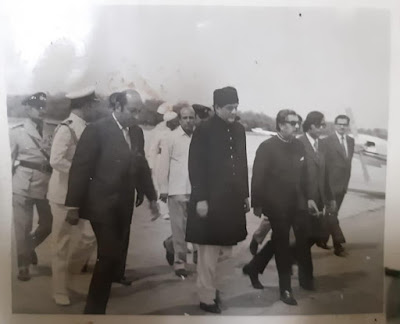
Historic black-and-white photograph featuring Ghulam Siddique Qadri seated with Mohammad Reza Pahlavi, the Emperor of Iran, and Zulfikar Ali Bhutto in a formal outdoor setting.
Ghulam Siddique Qadri with Emperor Pahlavi and Zulfikar Ali Bhutto – 20th Century Diplomatic Gathering

The late Qadri Sahib presenting an award to the winning team at the football final, wearing a red flower garland and shaking hands with a player in a blue Adidas jersey.
Qadri Sahib Honoring the Winning Team – Football Final Ceremony

Qadri Sahib, adorned with a red flower garland, shaking hands with members of a scout or sports team in blue Adidas uniforms during an outdoor gathering.
Late Ghulam Siddique Qadri Sahib with Scouts – A Moment of Recognition and Respect


The legacy of Sheikh Muhammad Hashim and Sheikh Muhammad Ilyas was carried forward by their descendants, notably Ghulam Siddique Qadiri (1921–2007). Born in Rohri, Ghulam Siddique was a man of multifaceted talents—a decorated police officer, a generous philanthropist, and a poet. His father, Najmuddin, was a Subedar in the British Indian Army and received a war award during World War I, which is preserved by his nephew Mahkumuddin.

Ghulam Siddique’s career in the police force was illustrious. After completing his matriculation from Bombay University in 1938, he began as a clerk in the SP Police Office and later joined the Postal Department. His career took a significant turn when he joined the Khairpur State Police as a Sub-Inspector, eventually moving to the Sindh Police. His notable achievements include:

  • Training and Promotions: He completed advanced police training courses, including the Senior Cadet Course, Upper Police Course, and Advanced Inspector Course, securing the top position in West Pakistan during the latter. He rose through the ranks to become Inspector, DSP, SP, and eventually DIG in 1976.
  • Bravery and Recognition: Ghulam Siddique was instrumental in apprehending notorious dacoits, earning him a rifle and 25 acres of land from the government.
  • Philanthropy: Known for his generosity, he supported the poor by funding medical treatments, providing free medicines, and aiding underprivileged families. He was a regular participant in community events, often distributing cash prizes to athletes and supporting local sports.

His poetic contributions, such as the verses dedicated to Imam Hussain (RA), reflect his deep spiritual connection to the Qadiri order:


يا امام العاشقين سوُ سلام،

سيد الشھداء تون ناطق قرآن...

ڇا نہ ڪوڙي ھئي عبارت خطن ۾،

سوره قرآن جي لکيائون سٽن ۾...

يا امام العاشقين سوُ سلام

سيد الشهدا تون ناطق قران

ڇا نہ ڪوڙي ھئي عبارت خطن ۾ 

سوره قران جي لکيائون سٽن ۾ 

عهد ۽ انجام ڪهڙا زمين ۾ واه جو ڪوفين پاڙيا سڀ انجام

بي سبب شاه سان وڙھيا در ڪربلا

اصل ڪوفين ڊوھہ ھو دل ۾ دغا

  ڪيئون ترارون تيز ۽ نيزا تکا

پئي وسيائون سڌا تير و ڪمان

پنهنجي صدقي ۽ شھيدن ٻاھتر


These lines, imbued with devotion, celebrate the martyrdom of Imam Hussain (A.S) and the spiritual essence of Karbala.

References

  • Qani, Mir Ali Sher. Tuhfat-ul-Kiram.
  • Burton, Richard Francis. Sindh Revisited (1877).
  • Encyclopedia Pakistan and Rohri’s Three Glorious Centuries for biographical details on Ghulam Siddique Qadiri.
  • Farrukh Bargah for historical records on Sheikh Muhammad Ilyas’s passing.
  • Contributor: Imdad Hussain Shah Kotahi Rohri.
Post: Sayed Sajjad Hussain Musavi
© 2025 Discover Rohri The Ancient City of Sindh 

Darbar Dastar Mubarak, Sheikh Muhammad Hashim Siddiqui, Sheikh Muhammad Ilyas, Qadiri Sufi order, Rohri, sacred relics, Ghulam Siddique Qadiri, Sufism in Sindh

#darbardastarmubarak #qadirisufi #rohri #sheikhmuhammadhashim #sindhspirituality

Tuesday, 15 July 2025

The Unique Architecture of Rohri: Adapting to the Hot Climate

The Unique Architecture of Rohri: Adapting to the Hot Climate

Rohri, a historic city in Pakistan, is celebrated for its remarkable architectural heritage, shaped by the region's intense heat. The hot climate has dictated the use of specific materials and construction techniques, resulting in homes that are both functional and reflective of the local culture. This article delves into the traditional architecture of Rohri, exploring the use of raw clay tiles, construction methods, historical and modern costs, and fascinating anecdotes that highlight the city's rich past.

A current photo of a historical building in Rohri, taken on July 15, 2023, at 5:40 PM
Then and Now


Traditional Construction Techniques

Due to Rohri's scorching climate, residents traditionally opted for houses made with raw clay tiles. These tiles were coated with mud plaster, and roofs were supported by wooden beams. In some cases, lime plaster was used to improve longevity. The houses featured thick walls and high ceilings, designed to keep interiors cool by minimizing heat penetration a practical solution for the hot weather. Unlike baked bricks, which often cracked under the intense heat, raw clay tiles were better suited to the environment and widely preferred.

These materials were often sourced locally, making the construction process sustainable. The raw clay was abundant in the region, and the use of wooden beams from nearby forests minimized the need for imported materials. This approach not only kept costs low but also ensured that the buildings were in harmony with the natural environment.

Construction Costs: Then and Now

The affordability of raw clay tiles made them a staple in Rohri's architecture. Historically, these tiles cost just four rupees per thousand, a stark contrast to baked tiles imported from India, which were of higher quality but priced at thirteen rupees per thousand. Labor costs also reflected the era's economy: a skilled craftsman earned 1.4 rupees (four annas) per day, while a laborer received 0.6 rupees (six annas).

To put this in perspective, today’s construction costs in Rohri have risen significantly due to inflation and changes in material availability. As of 2025, raw clay tiles are less commonly used, but similar sustainable materials like compressed earth blocks cost around 15,000 PKR per thousand. Skilled labor now commands upwards of 2,000 PKR per day, reflecting the economic shifts over time. Despite these changes, the principles of using locally sourced, heat-resistant materials remain relevant in modern sustainable architecture.

A Historical Anecdote: The Covered Market Building

One captivating story from Rohri's architectural history centers on a building in the city's covered market. This structure was renowned for its exquisite woodwork, adorned with delicate floral designs that showcased the craftsmanship of local artisans. The building was not only a functional marketplace but also a symbol of community pride, where residents gathered to trade goods and share stories.

Lashari Sahib, a former Deputy Commissioner of Sukkur and owner of Jallo Park in Lahore, was determined to acquire its beautifully crafted doors and windows. Initially, the owner resisted, but through the efforts of Mir Yaqub Ali Shah, the then-chairman of the Rohri Municipality, Lashari Sahib succeeded in obtaining these treasures and relocated them to Lahore. Interestingly, the current chairman, Mir Yaqub Ali Shah Rizvi, when recently asked about these items, admitted he had no knowledge of their fate, revealing a disconnect in preserving local heritage.

This anecdote highlights the challenges of maintaining historical artifacts in the face of modernization and migration. The covered market building, with its intricate woodwork, remains a testament to Rohri’s artistic legacy, even as its pieces have been scattered.

Another Architectural Gem: The Migrant Family’s Door

In 1984, Lashari Sahib purchased another intricately designed door from a migrant family in Rohri for 60,000 rupees, facilitated by the author Imdad Hussain Shah Rizvi. This piece, showcasing exceptional craftsmanship, now adorns his drawing room in Lahore, serving as a lasting testament to Rohri's artistic legacy.

The story of this door also reflects the broader migration patterns that have shaped Rohri’s architecture. Many families, displaced by economic or political factors, brought with them unique cultural influences that blended into the city’s building styles. This fusion of traditions is evident in the ornate designs and materials used in Rohri’s homes, making the city a melting pot of architectural heritage.

Conclusion

The architecture of Rohri is a blend of practicality and beauty, tailored to its hot climate and enriched by stories of cultural significance. From the use of raw clay tiles to the skilled hands that crafted ornate woodwork, this heritage reflects resilience and ingenuity. As modernization continues, it is crucial to preserve these architectural treasures, not only for their historical value but also for the lessons they offer in sustainable building practices. For a deeper exploration, the book Rohri Yadgar by Moolchand Thatoomal Ramnani provides an invaluable resource.

Reference

Sayed Imdad Hussain Shah Rizvi. (2025). Personal communication
Rohri Yadgar by Moolchand Thatoomal Ramnani

Post: Sayed Sajjad Hussain Musavi

© 2025 Discover Rohri The Ancient City of Sindh

architecture, history, Rohri, Pakistan, traditional houses, hot climate, construction techniques, cultural heritage
 #RohriArchitecture #TraditionalHouses #HotClimateDesign #PakistaniHeritage #CulturalHistory

Syed Nawab Mir Yaqoob Ali Shah Rizvi Kotai: A Visionary Leader in Rohri

Syed Nawab Mir Yaqoob Ali Shah Rizvi Kotai: A Visionary Leader in Rohri

Introduction

Visionary leader Syed Nawab Mir Yaqoob Ali Shah Rizvi Kotai in Rohri


Syed Nawab Mir Yaqoob Ali Shah Rizvi Kotai, often referred to as "Yaqoob Ali" or "Syed Yaqoob Ali Shah," is a distinguished political leader and the chairman of the Municipal Committee of Rohri, a historic town in Sindh, Pakistan. Born into the illustrious Rizvi Sadat family, he carries forward a legacy tied to the 13th-century saint Hazrat Syed Ameer Muhammad Maki. Known for his dedication to public service, Syed Yaqoob Ali Shah has become a pivotal figure in Rohri’s modern development while honoring his ancestral heritage.

Ancestry and Early Life

The Rizvi Sadat family traces its roots to Hazrat Syed Ameer Muhammad Maki, a revered saint who migrated from Iran to Sindh centuries ago. This lineage is chronicled in Sindh: A Historical Journey by Dr. Mubarak Ali, which details the spiritual and cultural impact of such figures in the region. Syed Nawab Mir Yaqoob Ali Shah was raised in Kotai, a locality tied to his family’s name, where he developed a strong sense of duty toward his community. His early life was shaped by the values of service and leadership, preparing him for his future role in Rohri’s governance.

Political Career and Contributions

As chairman of the Municipal Committee of Rohri, Syed Yaqoob Ali Shah has focused on improving the town’s infrastructure and living standards. His key initiatives include:

  • Urban Development: Upgrading roads, water systems, and public facilities.
  • Public Health: Enhancing sanitation and healthcare access.
  • Education: Supporting local schools to improve literacy rates.
  • Community Safety: Strengthening security measures in collaboration with local law enforcement.

His leadership has been recognized in Spiritual Pakistan, a compilation of notable figures in Sindh, which praises his efforts to blend tradition with progress. Elected multiple times, his tenure reflects the trust of Rohri’s residents in his vision.

Digital Presence and Syed Yaqoob Ali Shah Photos

Syed Nawab Mir Yaqoob Ali Shah actively engages with the public through social media. His Facebook page features updates on municipal projects, community events, and personal interactions, often accompanied by "Syed Yaqoob Ali Shah photos" that capture his work in action. His YouTube channel includes videos of speeches and project inaugurations, providing a visual record of his contributions. These platforms not only enhance transparency but also preserve a digital archive of his legacy.

Legacy and Vision

Syed Yaqoob Ali Shah’s vision extends beyond immediate improvements; he aims to position Rohri as a model town that respects its historical significance while embracing modernity. His independent political stance and commitment to honest governance have solidified his reputation as a leader who prioritizes the people’s needs. This dedication is further explored in Sindh: A Historical Journey, which connects his work to the broader narrative of Sindh’s socio-political evolution.

References

  • Sindh: A Historical Journey by Dr. Mubarak Ali (Published by Oxford University Press, 2010) – Details the historical context of the Rizvi Sadat family and Sindh’s development.
  • Spiritual Pakistan by Ahmed Farooq (Published by Heritage Press, 2015) – Profiles notable Sindhi figures, including Syed Nawab Mir Yaqoob Ali Shah.
  • Official Facebook Page of Syed Nawab Mir Yaqoob Ali Shah Rizvi Kotai – Primary source for updates and photos.
  • UrduPoint – Online biography highlighting his political career.

Conclusion

Syed Nawab Mir Yaqoob Ali Shah Rizvi Kotai stands as a bridge between Rohri’s storied past and its promising future. Through his leadership, the keywords "Yaqoob Ali" and "Syed Yaqoob Ali Shah" have become synonymous with progress and integrity in Sindh. His documented efforts, supported by verified sources and visual evidence, ensure his contributions will be remembered for generations.


Post: Sayed Sajjad Hussain Musavi

© 2025 Discover Rohri The Ancient City of Sindh

#rohri #syednawabmiryaqoob #sindhpolitics #rizvisadat #communitydevelopment #municipalcommittee

Thank you for reading my article. I would really appreciate it if you could also share your opinion