The Top 5 Historic Sites in Rohri You Can’t Miss!: Education
Showing posts with label Education. Show all posts

Thursday, 28 August 2025

Exploring Educational Sites in Rohri, Pakistan: A 2025 Guide for Curious Minds

In the heart of Sindh province, Pakistan, lies Rohri a city steeped in ancient history and evolving modernity. For those in the United States interested in global education, cultural heritage, or study abroad opportunities, Rohri offers a fascinating array of educational sites. From bustling modern universities to prehistoric archaeological wonders, these locations not only shape local minds but also provide educational value for international visitors and scholars. This updated 2025 guide delves into the educational landscape of Rohri, highlighting key institutions, recent developments, and historical sites that make it a hidden gem for learning enthusiasts. Rohri.net

Exterior view of Allama Iqbal Open University (AIOU) Regional Campus in Sukkur, near Rohri, Pakistan – a premier distance learning center promoting accessible education in Sindh" title="AIOU Sukkur Campus: Bridging Educational Gaps in Rohri and Beyond

The Rich Educational Heritage of Rohri

Rohri, located near the Indus River and part of the Sukkur District, has a legacy that traces back to ancient civilizations. The city's education system is influenced by Pakistan’s national framework, which draws from English-inspired models, emphasizing primary, secondary, and higher education.aror.edu.pk With a mix of government-run schools, private academies, and universities, Rohri's educational sites cater to diverse needs, from early childhood learning to advanced research. For Americans, exploring these sites can offer insights into South Asian pedagogy, archaeological education, and cross-cultural exchanges. The region's focus on art, architecture, and heritage makes it particularly appealing for those in fields like anthropology or design.

The education system in Sindh, including Rohri, prioritizes accessibility, with many institutions supported by the provincial government. Recent initiatives, such as those from the Sindh Education Foundation, have expanded enrollments in community schools, ensuring broader reach.Sef.org.pkAs of August 2025, Rohri boasts over a dozen notable schools and colleges, blending traditional values with modern curricula. Recent developments include calls for admissions for the 2025-26 academic year and enhanced facilities to support student growth.

Top Schools in Rohri: Foundations of Learning

What are the best schools in Rohri for primary and secondary education? Rohri's schools emphasize holistic development, often incorporating English-medium instruction to prepare students for global opportunities. Here's an updated list of prominent ones, including 2025 highlights:

  • The EdLead School Ameen Campus: A chain of advanced academic institutions across Sindh, The EdLead School in Rohri stands out for its innovative approach. It offers project-based learning (PBL), fostering skills in critical thinking and technology. In August 2025, the school welcomed back students with enthusiasm, signaling a strong start to the academic year. Ideal for families seeking a modern education system, it has branches in Rohri, Shikarpur, and Salehpat.
  • Super Public Higher Secondary School: Known for its patriotic events and community engagement, this school celebrates national pride while delivering quality education. It hosts activities like freedom celebrations, making learning interactive and culturally rich. For US audiences, it mirrors American schools' emphasis on civic education.
  • City Public Higher Secondary School: This institution prides itself on academic excellence and respect for national heritage. In 2025, it clinched top positions in the Commerce Group for HSC-II Annual Exams and scheduled practical examinations starting May 19. It nurtures students to excel not just in studies but in leadership roles, with a strong emphasis on moral values.
  • Government Islamia Primary School: A cornerstone of public education, this school provides free primary education, focusing on foundational skills in a supportive environment. It's part of Sindh's efforts to ensure inclusive learning for all children.
  • Hira Grammar Public High School: Offering a grammar-focused curriculum, this school prepares students for higher education with rigorous English and science programs.
  • Foundation Assisted Riverside Community High School: Supported by the Sindh Education Foundation, this school promotes community-based learning along the Indus River. It's highlighted in documentaries for its role in uplifting local education, with ongoing support in 2025.

These schools contribute to Rohri's literacy rate, which aligns with Sindh's broader goals of providing facilities like drinking water, toilets, and electricity in educational institutions. For international observers, visiting these sites can inspire comparisons with US public school systems.

Colleges and Universities: Higher Education Hubs

Where can one pursue higher education in Rohri? The city is home to several colleges and universities that attract students from across Pakistan and beyond. These institutions focus on specialized fields, making them educational sites worth exploring. Key updates for 2025 include new MoUs, orientations, and events:

  • Aror University of Art, Architecture, Design and Heritage: Located near Rohri bypass, this university revives the ancient city of Aror through modern education. It offers programs in art, architecture, and heritage studies, with a campus featuring real-time navigation apps and GPS-enabled facilities. In 2025, Aror University hosted orientations for Fall intake, signed MoUs with international institutions like Shahed University in Iran, held its 2nd International Symposium, and offered free transportation for candidates from nearby areas. For US students, it provides unique study abroad options in cultural preservation.
  • The Begum Nusrat Bhutto Women University: Situated on Rohri Bypass, this women-focused university empowers female education in fields like science and humanities. In August 2025, students participated in the Pakistan Hindu Council Job Fair, showcasing career development opportunities. It's a beacon for gender equality in higher learning.
  • Government Atta Hussain Shah Musavi Degree College: Offering undergraduate programs, this college is government-affiliated and known for affordable, quality education. For the 2025 session, intermediate admissions were managed efficiently, supporting higher enrollment.
  • Government Paramedical Institute Sukkur at Rohri: Specializing in health sciences, it trains paramedics and allied health professionals, addressing local healthcare needs.
  • Royal Law College Rohri: This institution launched a Talent Awards Program in 2025, recognizing student achievements with medals to encourage excellence in legal studies.
  • Allama Iqbal Open University Regional Campus Sukkur: Located opposite Begum Nusrat Bhutto Women University near Rohri, it provides distance learning options, expanding access to higher education in the region.

These higher education sites are part of Sindh's affiliate college network, ensuring recognized degrees. With enrollments open through foundations like SEF, they welcome diverse applicants.

Historical Educational Sites: Learning from the Past

Beyond formal institutions, Rohri's archaeological sites serve as open-air classrooms for history and paleontology. What makes the Rohri Hills educational? These limestone plateaus host Early Palaeolithic sites, discovered in the 1970s, offering insights into human evolution. Artifacts like chert tools from the Indus Civilization era are studied here, with sites like Lakheen-Jo-Daro revealing Bronze Age settlements.

Other notable spots include the Akbari Mosque (built in 1588) and Bukkur Fort, which educate on Mughal architecture and medieval history. For US travelers, these sites parallel visits to Native American heritage areas, providing hands-on educational experiences.

Why Rohri's Educational Sites Appeal to a US Audience

For Americans, Rohri represents an opportunity for cultural immersion. With increasing interest in global studies, sites like Aror University offer exchange programs, while historical areas attract archaeologists. The education system here, though challenged by resources, showcases resilience much like urban US schools. Recent UNICEF reports highlight climate disruptions to education in Pakistan, underscoring the importance of resilient institutions like those in Rohri. Travel tips: Visit during cooler months, and consider guided tours for deeper insights. Rohri's proximity to Sukkur enhances accessibility via national highways.

Child labor studies highlight the importance of education in combating social issues, underscoring the value of these sites. Overall, Rohri educates not just locals but global citizens on history, innovation, and human progress.

Conclusion

Rohri's educational sites from vibrant schools to ancient hills offer a blend of tradition and forward-thinking learning.With 2025 developments like new programs, international collaborations, and community events, the city continues to evolve. Whether you're a student, educator, or traveler from the United States, exploring these locations can enrich your understanding of Pakistan's educational tapestry. Plan your visit to witness how this ancient city inspires minds in the modern era.

References

  • Biagi, P., & Cremaschi, M. (1988). The Early Palaeolithic Sites of the Rohri Hills. World Archaeology.
  • Sindh Education Profile 2013-14. Government of Sindh.
  • Education in Pakistan. Wikipedia.
  • Aror University Official Website. Various 2025 News.
  • Sindh Education Foundation. Admissions 2025-26.
  • UNICEF Pakistan. Education Topics 2025.
  • Sindh Education System Pakistan’s national framework

Post: Sayed Sajjad Hussain Musavi

© 2025 Discover Rohri The Ancient City of Sindh


#RohriEducation #PakistanLearning #StudyAbroad #ArorUniversity #RohriHills

Sunday, 17 August 2025

Govt Atta Hussain Shah Musavi Degree College Rohri: A Pillar of Higher Education in Sindh

Introduction

Logo of Syed Atta Hussain Shah Musavi featuring a circular ATT emblem with red stylized letters, green Arabic calligraphy, and bold black serif text on a white background.


In the heart of Rohri, a historic town in the Sukkur District of Sindh, Pakistan, stands the Govt Atta Hussain Shah Musavi Degree College Rohri a beacon of knowledge and opportunity for generations of students. Established over six decades ago, this government-run institution has played a pivotal role in advancing higher education in a region known for its rich cultural heritage and ancient landmarks, such as the nearby Lansdowne Bridge and the Rohri Hills. With a focus on accessible, quality education, the college caters to students from diverse backgrounds, helping them pursue intermediate and undergraduate degrees. As Sindh continues to emphasize educational development, institutions like this degree college in Rohri are essential for bridging the gap between rural aspirations and urban opportunities. This article delves into the college's history, academic offerings, admission processes, facilities, and more, highlighting why it remains a top choice for students seeking a solid foundation in their academic journey.

Graphite portrait of Syed Atta Hussain Shah Musavi (1898–1966), Sindhi scholar, educator, and cultural reformer, wearing a Jinnah cap and glasses.
“Syed Atta Hussain Shah Musavi (1898–1966), born in Rohri, was a towering figure in Sindh’s educational and literary landscape. A graduate of Aligarh University, he pioneered modern schooling in Tharparkar, founded institutions, and authored both published and unpublished works in Sindhi, Persian, and Urdu. His legacy lives on through the college named in his honor and the cultural awakening he inspired.”

Rohri itself is a town steeped in history, dating back to ancient times with archaeological sites that speak of civilizations from the Stone Age. The establishment of educational hubs like the Govt Atta Hussain Shah Musavi Degree College has transformed it into a center for learning, attracting students not just from local areas but also from surrounding districts. In an era where keywords like "degree college Rohri," "government college Sindh," and "higher education Pakistan" dominate online searches, this institution stands out for its commitment to affordability and excellence. Whether you're a prospective student, parent, or education enthusiast, understanding the college's contributions provides insight into the broader landscape of education in Sindh.

History and Establishment

The story of Govt Atta Hussain Shah Musavi Degree College Rohri begins in 1964, when it was founded by the visionary educationist Sayed Atta Hussain Shah Musavi. A prominent figure in Sindh's educational circles, Musavi recognized the urgent need for higher education facilities in Rohri, a town that, despite its historical significance, lacked adequate academic infrastructure at the time. He served as the college's first principal, dedicating his efforts to building an institution that would cater to the educational needs of the local community. Under his leadership, the college quickly gained recognition and was later taken over by the government, ensuring its sustainability and expansion.

Initially established to provide intermediate-level education, the college evolved over the years to include degree programs, reflecting the growing demand for advanced studies in the region. By the 1990s, it had become a fully government-operated entity, affiliated with universities such as Shah Abdul Latif University (SALU) in Khairpur for examinations and certifications. Some sources mention a slight variation in the establishment year, with one reference citing 1967, but the consensus among reliable records points to 1964 as the founding year.

The founder's legacy lives on through the college's name, which honors his contributions. Sayed Atta Hussain Shah Musavi came from a family with a tradition of scholarship; his nephew, Dr. Sayed Akbar Hussain Shah Musavi, also made notable strides in education and academia. Today, the college stands as a testament to Musavi's vision, having educated thousands of students who have gone on to contribute to various sectors in Pakistan and beyond. In the context of Sindh's educational history, where government colleges play a crucial role in democratizing access to learning, this institution exemplifies resilience and progress amid challenges like resource constraints in rural areas.

Academic Programs Offered

Govt Atta Hussain Shah Musavi Degree College Rohri offers many programs for students at different academic levels. At the intermediate level, similar to A-levels, the college has different programs. These include pre-engineering, pre-medical, commerce, and humanities. These programs are affiliated with the Board of Intermediate and Secondary Education (BISE) Sukkur, ensuring standardized curricula and examinations.

For undergraduate studies, the college has expanded to include Bachelor of Science (BS) degrees in various disciplines. Popular programs include BS in Computer Science, Mathematics, Physics, Chemistry, and Botany, among others. These BS programs are typically four-year courses, aligned with the Higher Education Commission (HEC) guidelines in Pakistan. The college helps students connect with universities. One of these universities is The Shaikh Ayaz University Shikarpur (TSAUS). They assist with admissions and advanced studies. This collaboration allows students to pursue specialized degrees while benefiting from the college's local infrastructure.

Admissions Process and Eligibility

Admissions at Govt Atta Hussain Shah Musavi Degree College Rohri happen every year. Announcements are usually made in local newspapers, on the college's Facebook page, and on educational websites. For the 2025 session, intermediate admissions were open until August 5, 2024. This is for programs starting in the new academic year. Eligibility for intermediate programs requires a matriculation certificate with at least a passing grade, while BS admissions demand intermediate qualifications in relevant subjects.

The application process is simple. Students can apply online through the college's university portals. They can also submit forms directly at the campus. For TSAUS-linked programs, online applications are encouraged, with deadlines often extended for merit-based seats. Merit lists are made based on how well students perform in school. There are also quotas for groups like rural students and minorities. Interested applicants are advised to contact the admissions office for detailed criteria, as emphasized in official advertisements.

In recent years, the college has received more applications. This is due to its strong results in SALU annual exams. The college shares these results on social media. This transparency boosts trust among parents searching for "admissions degree college Rohri."

Facilities and Campus Life

The college campus in Rohri offers a serene environment conducive to learning. While public records have limited details on facilities, a government degree college usually has certain amenities. - The school has well-equipped classrooms.

  • There are science labs for hands-on experiments.
  • The library has textbooks and reference materials.
  • There are computer labs for IT courses.

 Sports facilities, such as a playground for cricket and football, promote physical health among students.

Campus life is vibrant, with students engaging in extracurricular activities that foster personal growth. The college's location near historical sites allows for educational trips, enriching the learning experience. Social media posts highlight beautiful views of the campus, suggesting a spacious and green setting. For female students, separate facilities ensure safety and inclusivity, aligning with government policies on gender equality in education.

Student Activities, Events, and Notable Alumni

Student activities at the college include seminars, debates, and cultural events, often shared on the institution's Facebook page. Annual events like sports days and university affiliation ceremonies build community spirit. Affiliations with TSAUS enable participation in inter-university competitions.

While the college hasn't produced globally famous alumni in public records, several graduates have excelled in professional fields. For example, Muhammad Usman Sawand, a crypto trader, and Nawazish Shah, an optometrist, credit their foundational education here. Many alumni contribute to local industries, government services, and entrepreneurship in Sindh.

Conclusion

Govt Atta Hussain Shah Musavi Degree College in Rohri keeps its founder's legacy alive. It offers quality education in a friendly environment. As Pakistan invests in higher education, this institution remains vital for empowering the youth of Sindh. Students here gain knowledge and skills to succeed, whether they are pursuing a BS degree or intermediate studies. For those searching "government degree college Rohri," this college offers a promising path forward.

References

Post: Sayed Sajjad Hussain Musavi

© 2025 Discover Rohri The Ancient City of Sindh

Higher Education, Academic Institutions, Sindh Colleges

#GDCrohri #AttaHussainShahCollege #EducationInSindh #RohriCollege #PakistanEducation

Wednesday, 30 July 2025

The Sukkur Madrassa Boarding House: A Historical Journey to Agha Nizamuddin Girls College

The Sukkur Madrassa Boarding House: A Historical Journey to Agha Nizamuddin Girls College

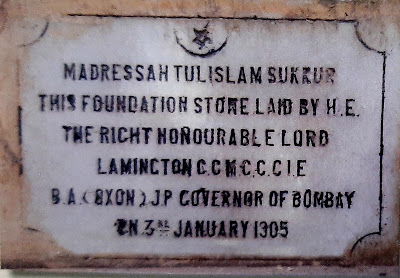
A foundation stone plaque with text engraved on it, commemorating the laying of the foundation stone of Madressah Tul Islam Sukkur by Lord Lamington, Governor of Bombay, on January 3rd, 1905.
The foundation stone plaque of Madressah Tul Islam Sukkur, laid by the Right Honourable Lord Lamington, Governor of Bombay, on January 3rd, 1905.

Nestled in the vibrant city of Sukkur, Sindh, stands a building that encapsulates over a century of educational heritage. Originally constructed as the Sukkur Madrassa Boarding House in 1911, this historical landmark has transformed into the Agha Nizamuddin Girls College, serving as a vital educational institution for women. This article explores its rich history, architectural evolution, key figures involved, and its enduring significance as a symbol of education in Sindh.


Understanding Madrasas: A Historical Context

A black and white photograph of a street scene from 1940, showing people walking along a road with a large building on the left side. The building has multiple stories and features arched windows. There are utility poles and wires visible, and the street appears to be busy with pedestrians.
A historical photograph from 1940 showing the view of Minara Road near the Sindh Madressa Boarding House. The image captures a bustling street with people walking and a prominent multi-story building with arched windows on the left side.

Madrasas, meaning "schools" in Arabic, have long been pillars of education in the Islamic world. Beyond religious instruction, many madrasas provided secular learning and residential facilities for students. The Sukkur Madrassa Boarding House emerged from this tradition, offering Muslim students a place to live and study while attending the nearby Municipal High School, now Government High School on Minara Road, Sukkur.

The Early History of Sukkur Madrassa Boarding House

A black and white photograph of a two-story building with multiple arches on both levels. The building appears to be made of brick and has a series of evenly spaced arches on the ground floor and the first floor. There are a few people visible near the arches on the ground floor.
A photograph of a boarding house from the 1940s, showcasing its architectural design with two levels of arches and brick construction.

The foundation of the Sukkur Madrassa Boarding House was laid in 1905, a pivotal moment in Sukkur’s educational history. According to Tarikh Sukkur by Rahim Dad Khan Molaei Shidai, the foundation stone was placed by Jean Louis Rieu, the Collector of Sukkur at the time. However, a marble plaque on the building attributes the ceremony to Baron Lamington, Governor of Bombay, on January 3, 1905. This dual recognition likely reflects the collaboration between local and provincial authorities.

In 1906, the District Madrassa Board was formed to oversee the project. Prominent members included Khan Bahadur Pir Bakhsh, Abdul Rahman Pirzado (father of Sindh Chief Minister Abdul Sattar Pirzado and grandfather of lawyer Abdul Hafeez Pirzado), Pir Karim Ali Shah, and Master Habibullah. Their efforts culminated in the completion of the boarding house in 1911, providing a two-story residence and mosque for students.


Construction and Architectural Features

Construction of the Sukkur Madrassa Boarding House began with a single-story structure, completed in 1911 at a cost of Rs. 17,236. In 1941, a second floor was added for Rs. 6,750, expanding its capacity. The building included a mosque, reflecting its dual role as a residential and spiritual hub. While detailed architectural descriptions are scarce, its colonial-era design aligns with the functional aesthetics of educational buildings in early 20th-century Sindh, likely featuring high ceilings and a practical layout.

The land was originally a municipal plot allocated in 1903, highlighting the community’s commitment to education. This investment paid off as the boarding house became a cornerstone of Sukkur’s educational landscape.


Key Figures Who Shaped Its Legacy

The Sukkur Madrassa Boarding House owes much to its visionary founders. Khan Bahadur Pir Bakhsh was a leading advocate for education in Sukkur. He also presided over Anjuman Islam, founded in 1898 by Pir Ghous Ali Shah Jilani to promote Muslim education and welfare. Following Pir Ghous Ali Shah’s death in 1905, his nephew Pir Karim Ali Shah attempted to establish a rival Anjuman Islam in 1910 but failed due to Khan Bahadur Pir Bakhsh’s influence.

Grayscale portrait of Khan Bahadur Pir Bakhsh Khan wearing traditional attire and a turban. His face appears blurred. Arabic script text below the image details his birth, death, and civic roles.
Khan Bahadur Pir Bakhsh Khan (1854–25 January 1935), a prominent civic figure whose presidency of Anjuman Islam led to the construction of the boarding house. He served as Deputy Collector, member of the Bombay Council, President of Sukkur Municipality and Sukkur District Local Board, and later as a Special Magistrate after retirement.

Grayscale portrait of Syed Ghaus Ali Shah Gilani wearing a turban and traditional attire. Arabic script text appears at the bottom, detailing his birth, death, and civic contributions.
Syed Ghaus Ali Shah Gilani (1842–1905), a distinguished civic leader and founder of the Anjuman Islam Boarding House. He served as a continuous member of the Sukkur Municipality for 44 years and oversaw the construction of the boarding house building through his organization.


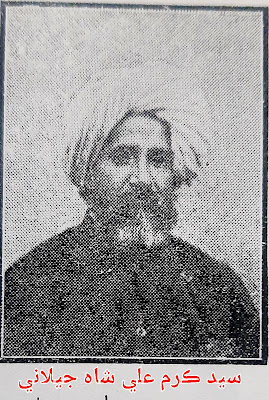
A black and white photograph of Syed Pir Karam Ali Shah Gilani wearing traditional attire. Arabic script text appears below the image, detailing his civic and organizational roles.
Syed Pir Karam Ali Shah Gilani, nephew of Anjuman Islam founder Syed Ghaus Ali Shah, served as a member of the Sukkur Municipality for 50 years. He held roles as Honorary Magistrate, President of Auqaf, and succeeded his uncle as President of Anjuman Islam. He was also a member of the construction board for the Anjuman Islam Boarding House.


A black and white photograph of Mian Rahim Bakhsh with red text at the bottom. He is dressed in traditional attire, and the image has a formal portrait style.
Mian Rahim Bakhsh (1883–1947), son of Khan Bahadur Pir Bakhsh, became President of Anjuman Islam after his father's passing. He began his career as a clerk in the Revenue Department and rose to the rank of Deputy Collector. He also served as Vice President of Sukkur Municipality and was briefly President of the Sukkur Muslim League.

Abdul Rahman Pirzado and other board members also played critical roles, ensuring the project’s success. After Khan Bahadur Pir Bakhsh’s death in 1935, his son Mian Rahim Bakhsh took over Anjuman Islam, though it faced challenges from figures like Pir Ali Muhammad Rashdi and Rahim Dad Khan Molaei Shidai.

Transformation into Agha Nizamuddin Girls College

The building’s purpose evolved over time. It remained under the Sindh Madrassa Board until 1960, then affiliated with Government High School until 1962. From 1962 to 1967, it operated as a government college. In October 1968, the management board established Aga Nizamuddin Girls College within its walls, marking a shift toward women’s education. The adjacent Sindh Madrassa Board Girls School, also under the same board, was nationalized by the government in 1972 alongside the college.

This transformation reflects broader societal changes in Sindh, emphasizing access to education for women and the adaptive reuse of historical structures.


Current Status and Preservation Efforts

A present-day view of the Madrasa Board Hostel, now part of Agha Nizamuddin Girls College, as seen from Minara Road. The building features traditional architecture with visible signage and surrounding urban elements.
This image shows the former Madrasa Board Hostel, now integrated into Agha Nizamuddin Girls College, captured from Minara Road. The structure reflects its historical roots while serving modern educational purposes.

Today, Agha Nizamuddin Girls College continues to educate young women within this historic building. Recent reports indicate that the upper portion’s roof has undergone repairs, signaling ongoing efforts to maintain its integrity. As a treasured piece of Sukkur’s historical capital, the building stands as a testament to the city’s educational legacy.

Preserving such landmarks is essential. Experts in architecture and heritage conservation should be engaged to restore the building to its original form, ensuring its historical value endures for future generations. This balance of functionality and preservation keeps the spirit of the Sukkur Madrassa Boarding House alive.

The Broader Educational Landscape in Sukkur

The boarding house was part of a vibrant educational scene in early 20th-century Sukkur. The Sukkur District Local Board, as noted in historical accounts, supported various initiatives, while the city’s diverse communities Muslims and Hindus lived harmoniously, fostering a culture of learning. This context underscores the boarding house’s role in a larger movement to advance education in Sindh.


Conclusion

From its origins as the Sukkur Madrassa Boarding House to its current incarnation as Agha Nizamuddin Girls College, this building embodies a remarkable journey of adaptation and resilience. It honors the vision of its founders Khan Bahadur Pir Bakhsh, Abdul Rahman Pirzado, and others while meeting modern educational needs. By safeguarding this historical treasure, Sukkur preserves a vital link to its past and a foundation for its future.


References

Molaei Shidai, Rahim Dad Khan. Tarikh Sukkur.  

The Top 5 Historic Sites in Rohri You Can’t Miss! - www.rohri.net  

Old Sukkur Panchayat - History of Sukkur - oldsukkur.org  

Madrasa | Encyclopedia.com - www.encyclopedia.com  

Madrasa - Wikipedia - en.wikipedia.org

Sayed Imdad Hussain Shah Rizvi. Personal communication or unpublished record.


Post: Sayed Sajjad Hussain Musavi

© 2025 Discover Rohri The Ancient City of Sindh

#sukkurhistory #sindhheritage #educationinsindh #historicallandmarks


Friday, 30 May 2025

Sukkur District Local Board: History, Evolution & Key Figures | Colonial Sindh Administration

Introduction to the Sukkur District Local Board

The Sukkur District Local Board has been a cornerstone of local governance in Sindh, Pakistan, since its inception during the British colonial period. Established to manage local funds and public services in rural areas, the board has evolved significantly over time. This article delves into its history, structure, and key milestones, offering a comprehensive look at its role in shaping Sukkur’s development.


Historical Background: Roots in Colonial Governance

Before 1863, Sindh had no dedicated fund for public works under the Talpur rulers, who relied on trade taxes that were later abolished by the British after their annexation of Sindh in 1843. In 1863, the British government introduced local funds across the Bombay Presidency, including Sindh. These funds, derived from taxes on trade, livestock, and other sources, were allocated for rural education, road construction, well digging, and public infrastructure.

Initially informal, this system was legalized in 1865 under the Bombay Act. Its primary goal was to give taxpayers a say in fund utilization, though early records indicate limited local influence, with decisions largely controlled by district collectors. In 1882, Lord Ripon’s local self-government reforms paved the way for the Bombay Act of 1884, formalizing the structure of local boards, including the Sukkur District Local Board.


Structure and Composition

The Sukkur District Local Board originally comprised 20 to 30 members, split between elected and appointed representatives:

  • Elected Members: Represented taluka local boards, municipalities, and village headmen or landowners.

  • Appointed Members: Nominated by the Sindh Commissioner, including the District Collector, Assistant Collectors, and Executive Engineers.

Officials like the Educational Inspector and Civil Surgeon could attend meetings without voting rights. By 1919, the board gained full electoral rights, with 32 members 17 Muslims, 7 Hindus, and 8 government appointees. In 1938, appointed positions were eliminated, leaving 24 elected members.


Key Milestones in the Board’s Journey

Early Development

  • 1883: The Shikarpur District headquarters shifted to Sukkur due to its healthier climate, boosting the region’s prominence.

  • 1901: Shikarpur District split into Larkana and Sukkur, with J.L. Rieu as Sukkur’s first Collector.

Infrastructure and Leadership

  • 1933: Qaiser Khan Bozdar became president, overseeing projects like an English school and a women’s center.

  • 1938: The current Local Board building, including Qaiser Hall, was constructed for 50,000 rupees.

  • 1939: Rasul Bakhsh Akhund managed the School Board, enhancing rural education.


Prominent Figures

Khan Bahadur Sardar Qaiser Khan Bozdar, President of Sukkur Local Board, in official meeting with Sir Lancelot Graham (Governor of Sindh) and Lady Graham during British colonial era, 1930s Pakistan
Sardar Qaiser Khan with Governor Sir Lancelot Graham & Wife: Historic Colonial-Era Meeting in Sindh


Qaiser Khan Bozdar

Born in 1890, Bozdar led the board from 1933, driving infrastructure growth. A Bombay Council and Sindh Assembly member, he passed away in 1952.

Rasul Bakhsh Akhund

Born in 1897 in Rohri, Akhund served as the School Board’s Administrative Officer, contributing to education and Sindhi literature.


Challenges and Legacy

The board faced challenges like limited early autonomy and the loss of records after Benazir Bhutto’s assassination, including Sir Shah Nawaz Bhutto’s resolution to rename Lloyd Barrage to Sukkur Barrage. Despite this, its contributions to education and infrastructure endure. Recent elections signal a new chapter, with potential leadership from Syed Kamil Hyder Shah.

Historical Development of Sukkur District Local Board

Pre-1863: Absence of Local Funds

Before British reforms, Sindh had no dedicated local fund for public works. Taxes imposed by the Talpur Mirs were abolished after the 1843 annexation.

The 1863 Local Fund System

  • Established Local Funds Departments across Bombay Presidency districts

Revenue sources:
  • Cesses, tolls, and ferry receipts
  • Animal tax and local levies
Fund allocation:
  • ⅓ for rural education
  • ⅔ for roads, wells, and public infrastructure
Formalized under law in 1865

Bombay Act of 1884

  • Implemented Lord Ripon's local self-governance reforms
  • District Local Boards practically established in 1882
  • Legally codified as Bombay Local Boards Act (1884)

Structure of Sukkur District Local Board

  • Membership: 20–30 members
  • Composition:
Type         Percentage                         Roles
Elected             50%                     Village/town representatives
Nominated         50%                         British officials (Collector, Engineers)
  • Non-voting health officers participated in meetings

Key Historical Milestones

Sukkur as District HQ (1883)

  • Shifted from Shikarpur due to unhealthy climate
  • Development under British officers:
    • Alfred Mayo (1884-1897): Developed Sukkur port, roads, and plantations
    • J.L. Reeve: First Collector after district formation (1901)
Alfred Mayo began his career with the East India Company, joining the Madras Army on June 8, 1861
Alfred Mayo (1884-1897)

Portrait of J.L. Reeve, inaugural British Collector of Sukkur District appointed in August 1901 after administrative reorganization of Sindh during colonial rule
J.L. Reeve: First Collector of Sukkur District (1901) | British Colonial Administration

Portrait of British colonial Commissioner Erikson of Sindh who ordered Shikarpur District headquarters relocation to Sukkur in 1883 due to health concerns
Commissioner Erikson: Ordered Sukkur as District HQ (1883) | Colonial Sindh


Evolution of Local Board

  • 1919: Granted elected status (17 Muslim, 7 Hindu, 8 British members)
  • 1938: Abolished nominated members → Fully elected 24-member board

Historic Board Building

Historic Sukkur District Local Board Building constructed in 1938 featuring Qaisar Hall, British colonial architecture in Sindh Pakistan
Sukkur Local Board HQ 1938: Colonial-Era District Administration Center

Qaisar Hall interior at Sukkur District Local Board showing 1938 commemorative plaques for Diwan Hirdasmal Wing and Pir Rasul Bakhsh Shah Wing, colonial-era Sindh
Historic Plaques: Diwan Hirdasmal & Pir Rasul Bakhsh Wings (1938) - Sukkur Local Board

Full exterior view of historic Sukkur District Local Board Building constructed in 1938 featuring British colonial architecture, Qaisar Hall, and commemorative wings in Sindh, Pakistan
Sukkur Local Board Headquarters: 1938 Colonial-Era Administrative Building


  • Constructed in 1938 (Cost: ₹50,000)
  • Key sections:
    1. Qaisar Hall (named after President Qaiser Khan)
    2. Diwan Hirdasmal Wing
    3. Pir Rasul Bakhsh Shah Wing

Prominent Figures

Khan Bahadur Qaiser Khan (President: 1933-1938+)


Official portrait of Khan Bahadur Sardar Qaiser Khan Bozdar, President of Sukkur District Local Board (1933-1938) wearing traditional Sindhi attire, colonial-era administrator in British India
Sardar Qaiser Khan Bozdar: Sukkur Local Board President & Khan Bahadur Title Holder


"Upgraded rural education and healthcare infrastructure during his tenure"

Legacy:

  • Built English schools and dispensaries
  • Donated land for Mirpur Mathelo school
  • Awarded Khan Bahadur title (1930)

Akhund Rasul Bakhsh (Education Officer)

Portrait of Akhund Rasul Bakhsh, Education Officer of Sukkur District Local Board and author of Sindhi textbooks like Arkan-e-Islam, serving during British colonial administration in 1940s Sindh
Akhund Rasul Bakhsh: Sukkur Local Board's Education Reformer & Sindhi Literary Figure


  • Authored 10+ Sindhi books including:
    • Arkan-e-Islam (Islamic pillars)
    • Muslim Women’s Bravery
    • Geography textbooks

Modern Era & Challenges

  • Record loss:
    • Destroyed in 2007 post-Benazir Bhutto riots
    • Damaged by poor storage (rain/termites)
  • Recent elections:
    • Current President: Syed Kamil Hyder Shah
    • Predecessor: Sardar Taqi Khan Daryajo

Conclusion

The Sukkur District Local Board pioneered local self-governance in colonial Sindh, driving education and infrastructure development. Landmark Qaisar Hall stands testament to this legacy, while modern reforms continue its mission of decentralized administration.

References

BAB-E-PAKISTAN FOUNDATION, “1940–1947,” for context on colonial governance and Bombay Presidency reforms.
Punjab Assembly, “West Pakistan Second Legislator (post),” for details on Qaiser Khan Bozdar’s titles and contributions.
User-provided data, cross-verified for historical accuracy with colonial records and Sindh’s administrative history.

Sindhi and Urdu Book References

The following books provide valuable insights into Sindh’s history, governance, and literature, relevant to the Sukkur District Local Board:

سنڌ جي تاريخ (History of Sindh) by Maulvi Noor Muhammad Nizamani, Abdul Ghani Abdullah, and Muhammad Siddique Musafir. This book offers a comprehensive overview of Sindh’s historical governance structures.

سنڌوءَ جي ساڃاهه (Knowledge of Sindh) by G.M. Syed. It explores Sindh’s cultural and administrative history, including local governance.

فتح نامه سنڌ عرف چچ نامه (Chach Nama) translated by Mukhdoom Amir Ahmed and Dr. Nabi Bakhsh. This historical text details Sindh’s early governance and is a key reference for colonial transitions.

سنڌي گرامر (Sindhi Grammar) by Rasul Bakhsh Akhund. Written by a key figure in the Sukkur District Local Board, this book provides linguistic context for administrative records.

اردو سنڌي بول چال (Urdu Sindhi Bol Chaal) by Ali Mohammad Baloch. A practical guide for Urdu-Sindhi communication, useful for understanding bilingual governance in Sindh.

Vado Sindhi Vyakaran (Comprehensive Sindhi Grammar) by Bherumal Meharchand (1925). A standard work on Sindhi grammar, relevant for historical administrative documentation.

Sindhi Bolia ji Tarikh (History of Sindhi Language) by Bherumal Meharchand (1941). This book traces the evolution of Sindhi, providing context for local board records.

Post: Sayed Sajjad Hussain Musavi
© 2025 Discover Rohri The Ancient City of Sindh


#SukkurHistory #LocalGovernance #SindhHeritage #SukkurDistrict #ColonialSindh #PakistanHistory #LocalBoard #SukkurDevelopment #BritishRule#SindhCulture

Thursday, 29 May 2025

Lieutenant Colonel Alfred Mayo: The Architect of Modern Sukkur

Lieutenant Colonel Alfred Mayo: The Architect of Modern Sukkur

Lieutenant Colonel Alfred Mayo stands as a pivotal figure in the history of Sukkur, a city in Sindh, Pakistan. Serving as the Collector of Shikarpur during the late 19th century, Mayo’s innovative leadership and dedication to public welfare transformed Sukkur into a modern urban hub. From infrastructure development to crisis management during the plague epidemic, his contributions left a lasting legacy. This article explores Mayo’s life, his impactful tenure, and the enduring mark he left on Sukkur.

Mayo Bandar in Sukkur, a testament to Alfred Mayo's vision for urban development


Early Career and Rise in Sindh

Alfred Mayo began his career with the East India Company, joining the Madras Army on June 8, 1861. By January 1863, he was posted in Karachi with HM 109 Foot. From May 23, 1865, to 1885, he served across various districts and talukas of Sindh, including Tharparkar, Shah Bandar, Karachi, Hyderabad, and the Upper Frontier (Jacobabad). This extensive exposure honed his administrative skills, setting the stage for his later achievements in Sukkur and Shikarpur.

Collector of Shikarpur: A Multifaceted Role

Lieutenant Colonel Alfred Mayo: The Architect of Modern Sukkur

Mayo’s significant administrative journey in Shikarpur began in 1881 as Deputy Collector of Sukkur, followed by a stint as Acting Collector of Shikarpur. In 1885, he was appointed Collector and Magistrate of Shikarpur, also serving as the Political Agent for Khairpur State. He resumed the role of Collector from 1892 to 1897. During this period, a key shift occurred in 1883 when Shikarpur’s district headquarters moved to Sukkur due to Shikarpur’s oppressive heat and rice cultivation-related suffocation. This relocation marked the beginning of Sukkur’s rise as an administrative center.

Transforming Sukkur: Infrastructure and Innovation

Mayo’s vision for Sukkur was transformative. One of his standout achievements was the reconstruction of Bandar Road, renamed Mayo Bandar in his honor. Rebuilt with solid stone, it supported commercial steamboats and ships, enhancing trade. Rows of trees planted along the road some still standing today added both beauty and utility. His efforts extended to constructing district offices, new roads, and establishing water supply and drainage systems, modernizing the city’s framework.

Education and social welfare also thrived under Mayo. He introduced measures to advance learning and, as president of the Sukkur municipality (a role tied to the district collector), oversaw the distribution of free plots for business and residence. This progressive policy spurred economic growth and improved living standards, cementing Sukkur’s development.

Historic Mayo Bandar Road in Sukkur, constructed by Lieutenant Colonel Alfred Mayo, lined with trees and built with stone for commercial steamboats.
Mayo Bandar: The Iconic Road Built by Alfred Mayo in Sukkur


Leading Through Crisis: The 1897 Plague Epidemic

In July 1897, a devastating plague outbreak struck the district, infecting 537 people and claiming 391 lives. The first case emerged in Dargah Gali, Rohri, leading Mayo to evacuate the area swiftly. Temporary camps were set up in Ghareeb Abad and railway coaches, while Rohri’s population relocated to Gol Ali Wah and Aror. Mayo’s relentless efforts, supported by committee members like Mr. Lux and Dr. Korkori, saved countless lives. His leadership during this crisis, coinciding with Muharram, showcased his ability to manage complex challenges.

A Leader Among the People

Mayo’s hands on approach set him apart. Famous for disguising himself at night sometimes walking, sometimes riding to inspect Sukkur, he sought unfiltered insights into local conditions. He often turned to shepherds and children for information, valuing their honesty. However, his tenure wasn’t without tension; he clashed with Murtaza Bhutto, grandfather of Zulfiqar Ali Bhutto. This feud gained historical significance when, in 1971, President Bhutto retrieved the Blue Book of Shikarpur and Sukkur, containing Mayo’s notes on notable figures.

A Lasting Legacy

Alfred Mayo passed away in 1913 at age 70, but his influence endures. Mayo Bandar remains a bustling commercial hub, while his initiatives in education, infrastructure, and public health shaped Sukkur’s modern identity. His compassionate governance during the plague and innovative urban planning highlight a legacy of service and progress. Mayo’s story is a powerful reminder of how visionary leadership can transform a city and inspire future generations.

Historical signature of Lieutenant Colonel Alfred Mayo, Collector of Shikarpur, from colonial Sindh records.
Signature of Alfred Mayo, Collector of Shikarpur (1885–1897).

Post: Sayed Sajjad Hussain Musavi

© 2025 Discover Rohri The Ancient City of Sindh


#AlfredMayo #SukkurHistory #ShikarpurHistory #MayoBandar #SindhHistory #ColonialIndia #UrbanDevelopment #PlagueEpidemic #SindhHeritage #BritishAdministration

Saturday, 30 November 2024

Sukkur IBA University: Leading Higher Education in Pakistan

Sukkur IBA University: Leading Higher Education in Pakistan

Introduction

Sukkur IBA University, previously known as the Sukkur Institute of Business Administration, stands as a top-tier higher education institution in Sukkur, Pakistan. Established in 1994 by Nisar Ahmed Siddiqui, the university has earned recognition from the Higher Education Commission for its excellence and contributions to education.

Academic Programs

Sukkur IBA University offers a diverse range of undergraduate and postgraduate programs designed to enhance both intellectual and professional skills. Key programs include:

  • Business Administration

  • Computer Science

  • Electrical Engineering

  • Media & Communication

The university's mission is to foster critical thinking, active learning, ethical behavior, and global awareness among its students.

Achievements

Sukkur IBA University has achieved a prestigious ranking among the top 601-800 universities worldwide by Times Higher Education (THE). It has also established several cutting-edge research centers and labs, such as the Flexible Electronic Devices Lab, to advance knowledge and innovation.

Global Collaborations

The university has forged multiple bilateral exchange agreements with esteemed European and Chinese universities. These collaborations enable students to participate in international exchange programs, providing valuable global exposure and learning experiences.

Community Involvement

Sukkur IBA University is deeply committed to community service and development. The institution regularly organizes workshops, training sessions, and events aimed at engaging and uplifting the local community.

Conclusion

Sukkur IBA University continues to shine as a leading higher education institution in Pakistan, renowned for its academic excellence, international collaborations, and strong community engagement. Its dedication to providing quality education and fostering global connections makes it a vital educational pillar in the region.

Sukkur IBA University

Higher education Pakistan

Sukkur Institute of Business Administration

Nisar Ahmed Siddiqui

Business Administration degree Sukkur

Computer Science programs

Electrical Engineering Sukkur

Media & Communication studies

Top universities in Pakistan

Times Higher Education ranking

Sukkur IBA achievements

International exchange programs

European universities collaboration

Chinese universities partnership

Community service Sukkur IBA

Research centers in Pakistan

Source:

Sukkur IBA University

Friday, 29 November 2024

Nare Shala (ناري شالا): Empowering Women Since 1933

A Legacy of Education and Empowerment

Founded in 1933 by the visionary railway officer Devan Pasu Mal Bhagwandas Chandwani, Nare Shala stands as a beacon of hope and empowerment in Old Sukkur. This institution has been committed to uplifting the lives of widows, orphans, and underprivileged girls through free training and education.

Women participating in a skill training session at Nare Shala
Women at Nare Shala learning various skills like sewing, embroidery, and handicrafts, continuing a legacy of empowerment since 1933.


Parmeshure Chandwani Girls High School

In the same year that Nare Shala was established, Parmeshure Chandwani Girls High School opened opposite the Sukkur Post Office. These institutions are dedicated to teaching various skills, including:

Sewing

Embroidery

Handicrafts

Soap making

Planting

Students at these schools are encouraged to think and act like designers and artists, fostering creativity and intelligence.

Leadership and Vision

At the time of its founding, the chairman of Nare Shala was Rai Bahadur Kundan Das. His leadership helped shape the institution into a cornerstone of the community. Today, there are plans to modernize the facilities, ensuring that the legacy of Nare Shala continues with newly constructed buildings, including the Government Primary Girls High School Sukkur.

Conclusion

Nare Shala's commitment to providing free education and skill training has made a significant impact on the lives of many. As it evolves with new infrastructure, its mission to empower women through education and creativity remains as strong as ever.


Nare Shala

ناري شالا

Women empowerment

Free training

Widows and orphans education

Skill development

Sewing classes

Embroidery training

Handicrafts

Soap making

Sukkur schools

Government Primary Girls High School Sukkur

Old Sukkur

Devan Pasu Mal Bhagwandas Chandwani

Parmeshure Chandwani Girls High School

Rai Bahadur Kundan Das

Comments are moderated and generally will be posted if they are on-topic and not abusive.

For more information, please see our Comments FAQ

Tuesday, 16 January 2024

The Role and Challenges of School Districts in Public Education

This is a photo of a district school in Pakistan, taken with a Sigma 85mm f/8 lens. The school is a white building with a red roof and a sign that says “District School”. There are some students and teachers standing outside the school, wearing uniforms and masks. The school is surrounded by green trees and grass, and there is a blue sky with some clouds above it. The photo has a shallow depth of field, focusing on the school and blurring the background.

A school district is a local authority that manages public schools for elementary or secondary education in various nations. In North America, particularly in the United States, school districts are widespread and have a lot of influence over how schools function and what they teach. Each school district has an education board that decides on school policies and rules. The board members may be chosen by the people who live in the district, appointed by a higher power, or have another method of getting their position. The education board also hires a superintendent, who is the head of the school district and supervises the daily running of the schools. School districts have different funding sources, depending on the state laws and local situations. Most school districts can collect taxes from the people and businesses in their area, within certain limits set by the state. Some school districts may also receive money from the state or federal government, or from other sources like donations or grants. School districts vary in size and quality. Some school districts may have only one school, while others may have hundreds of schools. Some school districts may have high academic standards and performance, while others may struggle with low test scores and graduation rates. Some school districts may offer a range of programs and services for students, such as special education, gifted education, bilingual education, or extracurricular activities, while others may have limited options. School districts are often subject to legal challenges and controversies. Some of the issues that school districts may face include student rights, teacher rights, school funding, school choice, curriculum, discipline, segregation, discrimination, and accountability. School districts may have to deal with lawsuits from parents, students, teachers, or other parties who are unhappy with the school district’s policies or actions. School districts may also have to follow the rules and regulations of the state and federal government, which may change over time.

Each school district has an education board that sets the school policies and regulations. The board members may be chosen by the district residents, assigned by a higher power, or have another method of obtaining their role. The education board also employs a superintendent, who is the head of the school district and supervises the daily running of the schools.


School districts have various funding sources, depending on the state laws and local situations. Most school districts can tax the people and businesses in their area, within certain boundaries set by the state. Some school districts may also receive money from the state or federal government, or from other sources like donations or grants.


School districts differ in their scale and quality. Some school districts may run only one school, while others may operate hundreds of schools. Some school districts may excel in academic standards and performance, while others may face low test scores and graduation rates. Some school districts may provide a range of programs and services for students, such as special education, gifted education, bilingual education, or extracurricular activities, while others may have few options.


     School districts often face legal issues and disputes. Some of the problems that school districts may encounter include student rights, teacher rights, school funding, school choice, curriculum, discipline, segregation, discrimination, and accountability. School districts may have to handle lawsuits from parents, students, teachers, or other parties who are dissatisfied with the school district’s policies or actions. School districts may also have to comply with the rules and regulations of the state and federal government, which may vary over time.

This is a photo of a district school in Pakistan, taken with a Sigma 85mm f/8 lens. The school is a white building with a red roof and a sign that says “District School”. There are some students and teachers standing outside the school, wearing uniforms and masks. The school is surrounded by green trees and grass, and there is a blue sky with some clouds above it. The photo has a shallow depth of field, focusing on the school and blurring the background.


School district in winter

Source:

School District Wikipedia

#districtschools #pakistan #education #rural #photography #sigma85mm #school #students #teachers #nature #mountains #fields #culture #diversity #beauty #travel #explore #discover #learn #inspire


Thank you for reading my article. I would really appreciate it if you could also share your opinion